


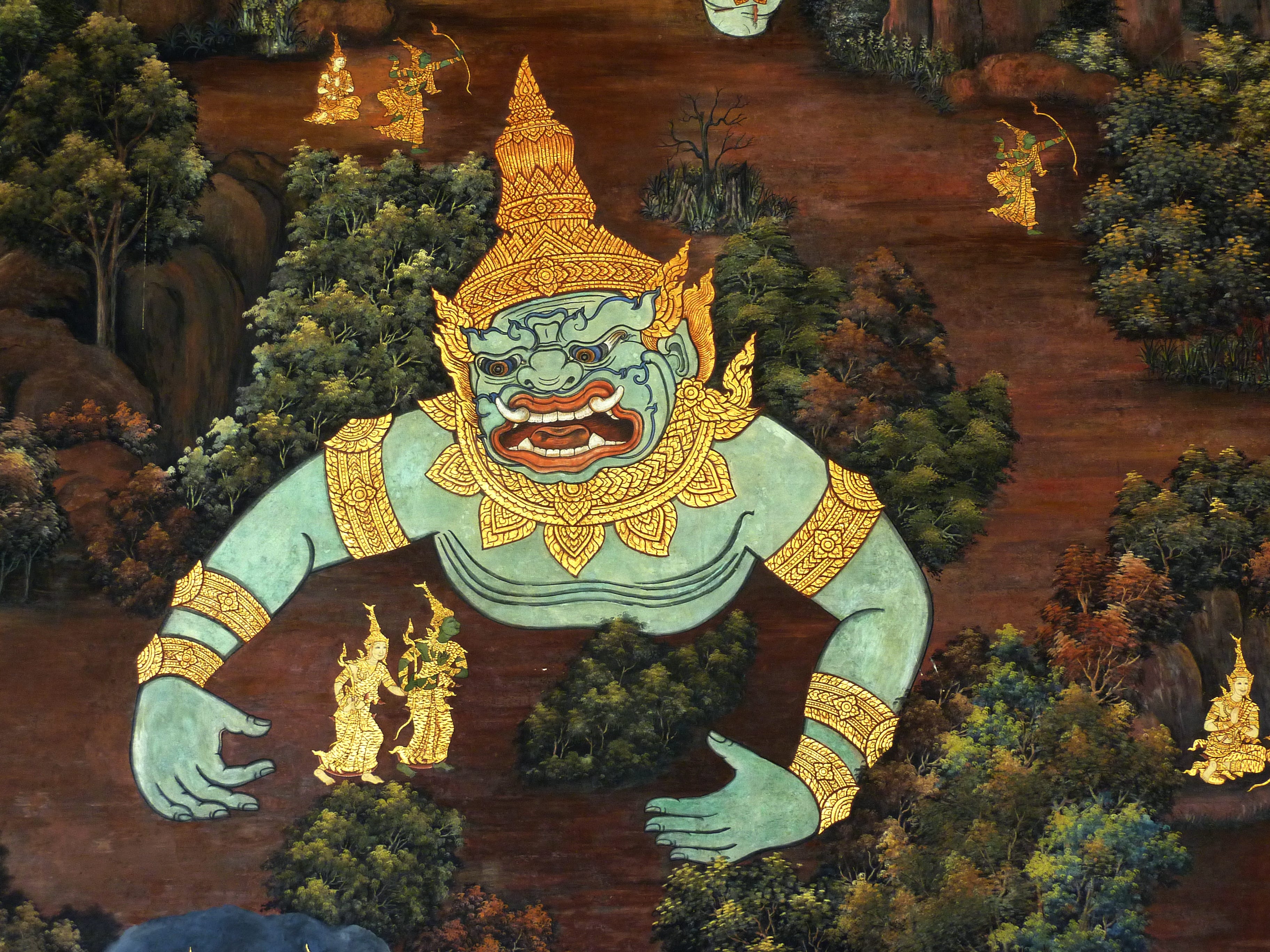
Consider this popular quote, attributed to the Italian Marxist philosopher Antonio Gramsci:
The old world is dying, and the new world struggles to be born: now is the time of monsters.
One must admit that it goes incredibly hard. The memetic power in this quote is enormous. As a result, it’s been all over the web in recent years. Whenever some writer feels that we’re in some kind of transition, and that the transition involves something unpleasant that can be metaphorically described as a monster, they might deploy the quote. Thus it has been applied to, among others: Donald Trump, AI, climate warming, and collapsing worldwide fertility; Israel’s leadership; ”oligarchic figures like Musk and Trump”; the Haiti crisis; Trump (but in a good, disruptive way); the rise of authoritarianism, populism, economic disruption, and technological transformation; Netanyahu, Zelensky, Milei, Trump, and Musk; environmental crises; Israel; and a “lack of solidarity and empathy and compassion.”
Truly, monsters galore.
Of course, as is often the case with potent memetic quotes, this one bears only superficial resemblance to anything that the Italian Marxist philosopher Antonio Gramsci actually said. What he did write, in his Prison Notebooks essays while he was imprisoned by the Fascist regime in the 1930s, was:
La crisi consiste appunto nel fatto che il vecchio muore e il nuovo non può nascere: in questo interregno si verificano i fenomeni morbosi più svariati.
Which, translated literally into English, gives:
The crisis consists precisely in the fact that the old is dying and the new cannot be born: in this interregnum a great variety of morbid phenomena occur.
No monsters, but rather “a great variety of morbid phenomena.” Why the discrepancy? As the quote became popular in recent years, a number of journalists were dispatched to investigate. One of the most comprehensive treatments came in The Guardian, in February 2026, which conclusively traced the “now is the time of monsters” version to the Slovenian neo-Marxist philosopher Slavoj Žižek, otherwise known for his verbosity, his incessant sniffing, and for hijacking question periods at the end of his public lectures in order to keep talking.
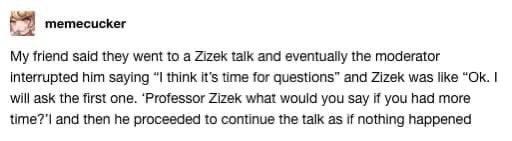
This is not particularly deep investigative journalism: Žižek himself claimed to be the source of the popular version: “Indeed,” he wrote in 2025, “I am responsible for a slightly shorter, and, dare I say, pithier iteration.” This pithier iteration was first seen in 2010, in an article titled A Permanent Economic Emergency. The mutant quote closed the piece, mentioning Gramsci, but with no precise citation to any source:
Or as Gramsci said, characterizing the epoch that began with the First World War, ‘the old world is dying, and the new world struggles to be born: now is the time of monsters’.
But while Žižek is responsible for this specific phrasing, he did not originate the most important mutation in the meme — turning “morbid phenomena” into “monsters.” When asked by The Guardian, he replied, partially in all caps: “I DON’T REMEMBER anything about it, but I am sure that I took the word from somewhere else.”
Here at Hopeful Monsters we care a lot about monstrous metaphors. So I had to figure this one out.
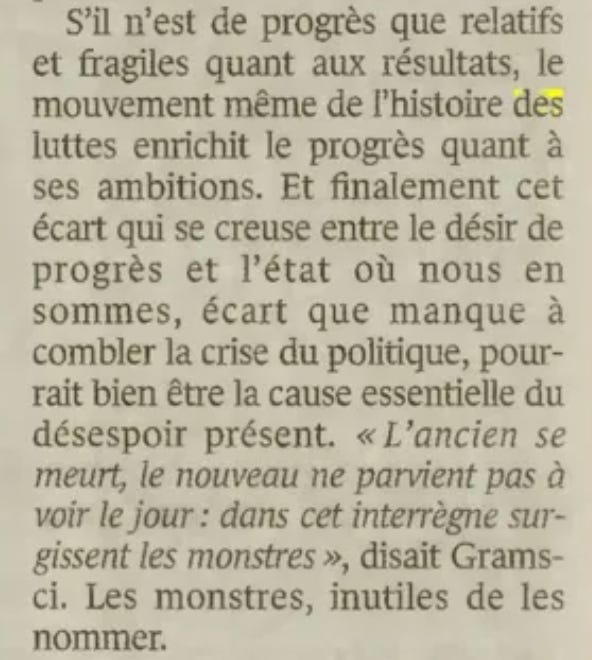
I picked up the trail from The Guardian after it mentions that similar versions of the quote existed in French before Žižek’s, circulating at least since a 1996 op-ed in the newspaper Le Monde. Without explanation, however, the author stopped there, saying that the “exact origin of Gramsci’s monsters remains elusive.” Maybe he doesn’t speak enough French to dig deeper. I do, so I tracked down the 1996 article, Une boussole au cœur des humains by Alain Lipietz. It makes some kind of argument that progress is relative (merely “a compass in the heart of humans,” suggesting but not imposing a direction) and quotes Gramsci like this:
« L’ancien se meurt, le nouveau ne parvient pas à voir le jour : dans cet interrègne surgissent les monstres », disait Gramsci. Les monstres, inutiles [sic] de les nommer.
Which I translate as:
“The old is dying, the new cannot be born: in this interregnum, monsters arise,” Gramsci said. These monsters, no need to name them.
(I included that second sentence because I find it funny that he assumes we know what he’s talking about. Based on the rest of the article, it’s probably neoliberalism.)
Who is Alain Lipietz? He is a French engineer, politician, and economist, a former member of the French Green party and Member of the European Parliament, a prolific writer, and the author of one of the most 90s-coded websites still online as of June 2026:

With the help of Claude Fable 5 — this all happened during the, like, 3 days that this model was available, and this little project was my way of messing with it — we found that Lipietz had used the “monsters” version earlier, in a 1988 article. The PDF is here, and the exact quote is:
« L’ancien se meurt, le nouveau ne parvient pas à voir le jour, dans ce clair-obscur surgissent les monstres », disait Gramsci.1
Did he use it earlier? Conveniently, Lipietz maintains a full list of everything he wrote since 1970 in a section of his website. Not conveniently, everything is saved as PDF image scans in which you can’t search text. Fortunately, when I told Claude Fable 5 about the PDF situation, it said “There’s a fix for that — I have a Linux machine here with OCR tooling. Let me pull the pre-1988 PDFs and run them through OCR, then grep for the key strings.” It did this overnight and found no other occurrence of the monsters quote. It did find that Lipietz used another version in 1986, but without monsters (or morbid phenomena; he just quoted the part about the old dying and the new not being born).
Did he take the monsters from someone else? One way of answering this question is to search the web thoroughly for earlier references, and try to gauge how much absence of evidence counts as evidence of absence, but Claude Fable was smarter than me: it proposed that I email Lipietz. So I did that. He replied the next day (translated by me):
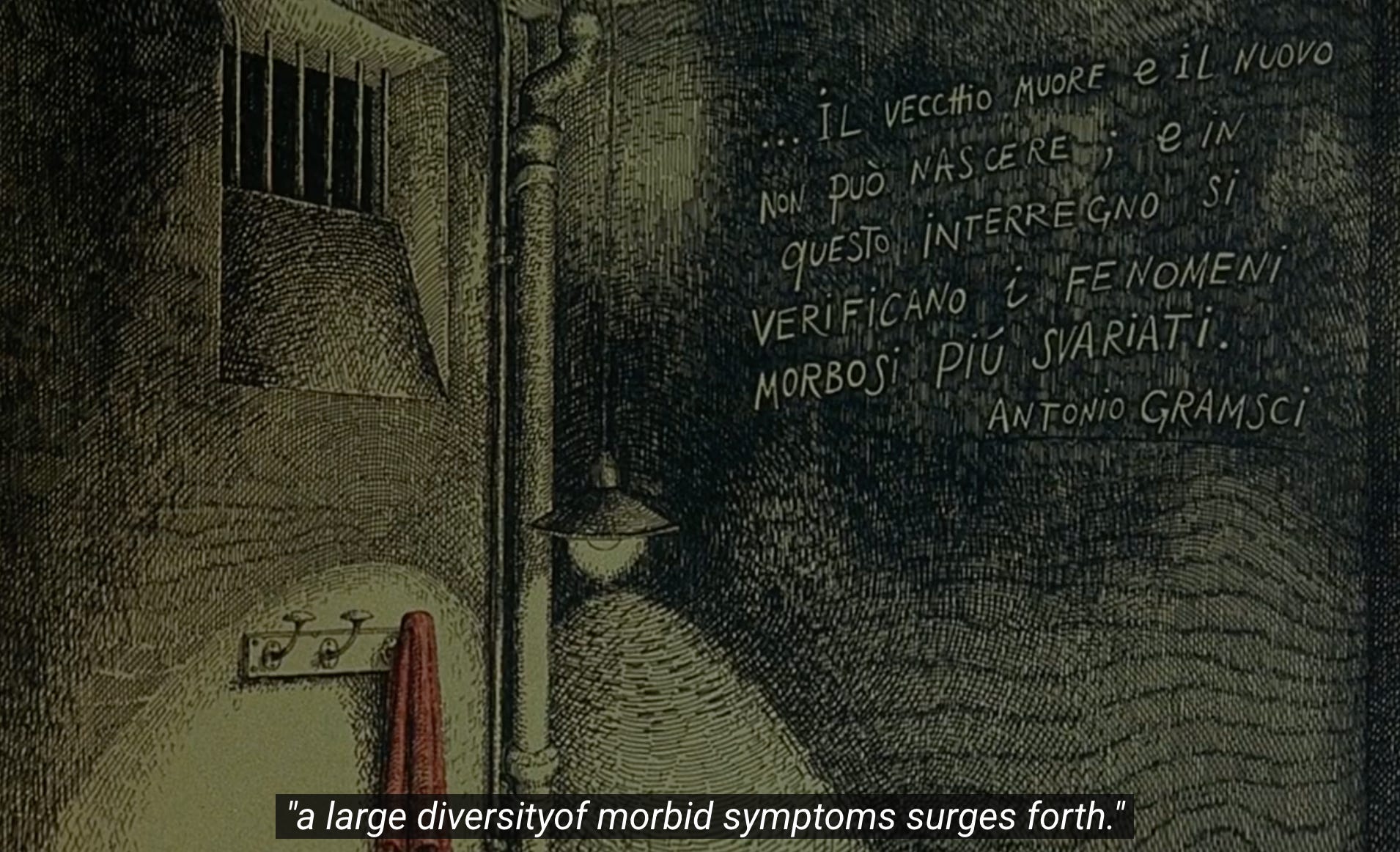
This is one of those quotations that float around in the air, without being sourced. … I have no idea where I first read it, with or without the monsters. I remember that it is quoted at the start of Mozart’s Don Giovanni by Losey, it must be where (in 1979) I learned it, but were the monsters already there? You could probably watch it.
Alright, so I pulled up the Joseph Losey film on YouTube. It does start with the quote! But the film (like the opera’s libretto) is in Italian, and the quote is likewise in Italian, quoting Gramsci faithfully. The English subtitles, at least on YouTube, mention morbid symptoms, not monsters.
Maybe the French subtitles are responsible for the mutation? Probably not: I found a passage in Deleuze, Cinéma 1 : L'image-mouvement (1983), where he mentions the Don Giovanni quotation as “symptômes morbides.”
So I had to search for earlier references to gauge the absence of evidence after all. One recent paper by Christopher Hobson, which is another analysis of this meme,2 claims that the quote appeared in English as “monsters surge” in 1969; but I paid a full six dollars to access the 1969 “The Old Left and the New” article from the Marxist magazine Monthly Review, and ascertained that no Gramsci was in there.3 In fact, the quote seems to have been more or less ignored until the 1979 opera movie. It was quoted in English in 1975 by Thomas R. Bates (as morbid phenomena), and Hobson says that scholars of Gramsci knew of it, but it probably didn’t become prominent until Losey quoted it, as did the Nobel-winning novelist Nadine Gordimer in South Africa in the early 1980s (also as morbid phenomena). Deleuze probably also contributed. Before them, the quote was dormant: in fact, French anthologies of Gramsci didn’t even include this particular essay from the Prison Notebooks until 1978. Not only were there no monsters before 1988 anywhere I could find, it seems that there weren’t a lot of morbid phenomena either before the late 1970s.
Thus, as far as I can tell, the trajectory of the meme was:
Coined by Gramsci in the 1930s, as morbid phenomena
Dormant after Gramsci’s death (1937), throughout the 1940s to the 1970s, with the quote finding no particular significance to scholars rediscovering his work
Cited in a few prominent cultural artifacts in the late 1970s and early 1980s, including Losey’s Don Giovanni (1979), Nadine Gordimer’s July’s People (1981), and Gilles Deleuze’s L’image-mouvement (1983)
Alain Lipietz learns of it at least by 1986, having pulled it from the zeitgeist; there’s some evidence that he is quoting from memory already at this date
In a 1988 article at the latest, Lipietz coins the monsters version, probably also quoting from memory (speculation: perhaps because it’s easier to think of the character of Don Giovanni as a monster than a “morbid phenomenon”)4
Lipietz re-uses this version several times in the 1990s, and others in the French intellectual milieu pick it up in the 2000s
Slavoj Žižek, who is known to read French,5 probably picks it up in turn from one of these sources, and then creates, voluntarily or not, the “pithier” version “now is the time of monsters” in 2010, replacing earlier formulations about an “interregnum” or “chiaroscuro”
At this point, the quote has reached peak virulence, and it spreads across the web as people reach for metaphors to describe Trump or Netanyahu or whatever they don’t like.
As for the question that opens this essay: Who or what might have inspired Lipietz to talk of “monsters” rather than “morbid phenomena” in 1988?

That’s right! It’s the far-right! Lipietz’s 1988 article, written right after the April-May 1988 presidential election in France, opens with a summary of the first round’s results. The big, “awful” surprise of that election was Jean-Marie Le Pen’s fourth place, with 14.39% of the vote, signifying the rise of the Front National far-right party that he had founded in 1972. Lipietz saw 1988 as a time when the electorate was increasingly fragmented, not finding a political project to build a consensus behind: an interregnum in which racist ideologies — monsters — could arise.
I suppose it’s not too surprising that the source of the mutation was the far-right, given that the quote ultimately comes from a Marxist and has historically been repeated mostly by Marxists. Still, it’s satisfying to have found a convincing answer. The quote was perhaps, as Lipietz told me, just in the air; but the air, in the spring 1988, smelled of the Front National.
(And has smelled like that ever since: Le Pen came second in 2002, his daughter Marine Le Pen came second in 2017 and 2022, and the party is widely expected to place first in the first round in 2027. If a good electoral performance of the far-right means we’re in a time of monsters, then we’ve been in such a time for more than my entire lifetime.)
A few observations in closing:
First, one reason I decided to write on this, beyond having surfaced actually new information, is that it’s a textbook example of memetic mutation. The exact sequence of words is the quote’s DNA; it took several decades for that sequence to reach peak virulence, and it took an intermediate mutation in the meantime. This blog is about cultural mutation, and this case is as clean as it gets!
Second, having sat with the quote for a while I can’t help but find it… really trite? I frankly have a hard time thinking of a time or situation that is not the time of monsters, where the old isn’t dying or the new isn’t struggling to be born. Maybe before humans were anatomically modern, hundreds of thousands of years ago. Since then, we’ve had culture, and culture is always changing, even during periods of relative stasis. People die, others are born, young people annoy their elders, voters complain about politics, new technologies change the old ways. We’re always undergoing some kind of transition, and there are always problems of some kind that a poetically inclined writer might want to describe as monsters.
There are absolutely ways to use this quote in a proper manner. Some periods really are interregnums, times between “regnums” of some kind. Venkatesh Rao has some good stuff about this idea in The Gramsci Gap. But you have to be precise. What exactly was true of the past, isn’t true anymore, probably will be true again in the future? Why does its absence cause morbid symptoms? The virulent Žižek version may be pithier, but it doesn’t encourage precision of thought.
And even if the monstrous metaphor sometimes feels apt — well, monsters can be hopeful, too. They can be the source of much-needed cultural change. In other words, perhaps now truly is the time of monsters, but that doesn’t mean it’s a bad thing. Perhaps they are the only way that anything new can be born, even.
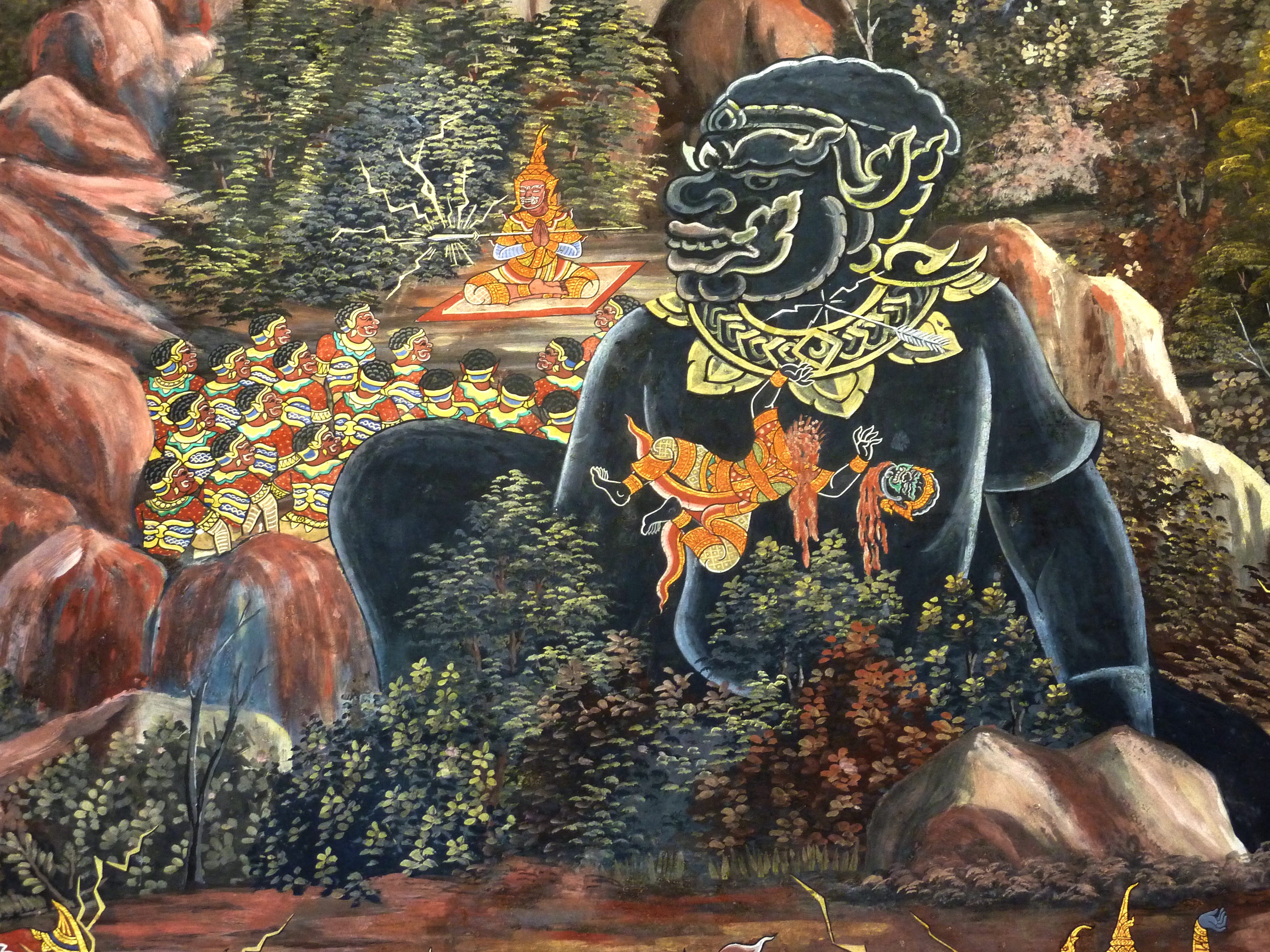
One interesting detail is that French sources translate “interregno” in two different ways: the literal version interrègne and the more poetic version clair-obscur, which means chiaroscuro or twilight. I haven’t looked into it that deeply, but both seem common, and Lipietz used both. The Žižek version, of course, just says “now.”
Hobson’s paper is “Memes and monsters of the interregnum: Gramsci between the times” (2025), but it focuses on the “interregnum” part of the quote rather than the monsters/morbidity.
The error seems to come from a misreading by Hobson of a paper by Andy Merrifield. Merrifield mentions a rare version of the English quote — “The crisis consists precisely in the fact that the old world is dying and the new cannot be born; and in this interregnum monsters surge” — in a paragraph about “The Old Left and the New,” without attributing the quote to the article, but in close proximity to it, which may have confused Hobson. Merrifield’s paper is from 2021, so post-Žižek.
Another fun detail: Lipietz’s 1988 article is available in four languages on his website: French, English, Italian, and Japanese. All translations of the Gramsci/Lipietz quote are interesting:
English: “‘The old is dying while the new has yet to appear . . . a dusky dawn when morbid symptoms will appear,’ as Antonio Gramsci noted.” The translator, George Ross, probably used his own knowledge of Gramsci to turn the monsters back into morbid symptoms, though he coined “dusky dawn” to translate clair-obscur.
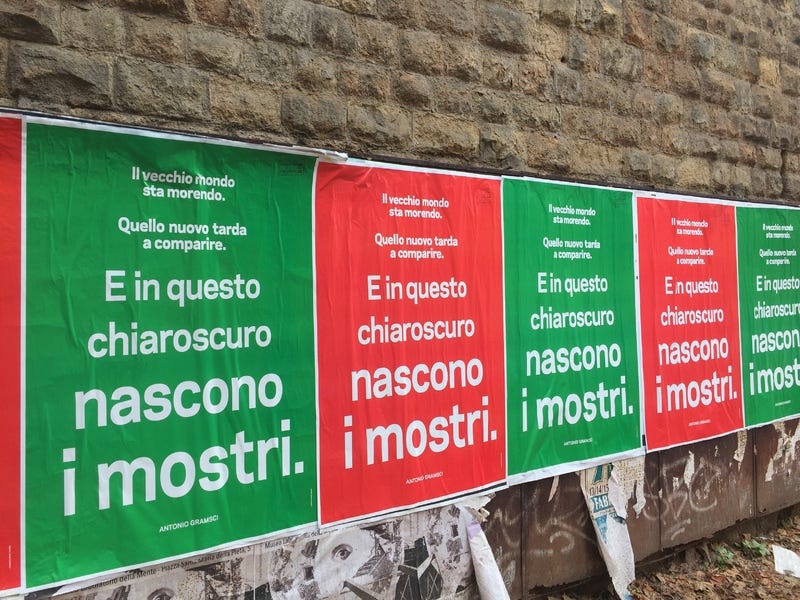
Italian: “Come diceva Gramsci, il vecchio muore, il nuovo non arriva a vedere il giorno, in questo chiaro-scuro si alzano i mostri.” Here the translator doesn’t use Gramsci’s original, but creates a new translation of the quote, using mostri instead of fenomeni morbosi! Interestingly enough, the monsters version is so memetically virulent that it competes with the original even in Italy nowadays.
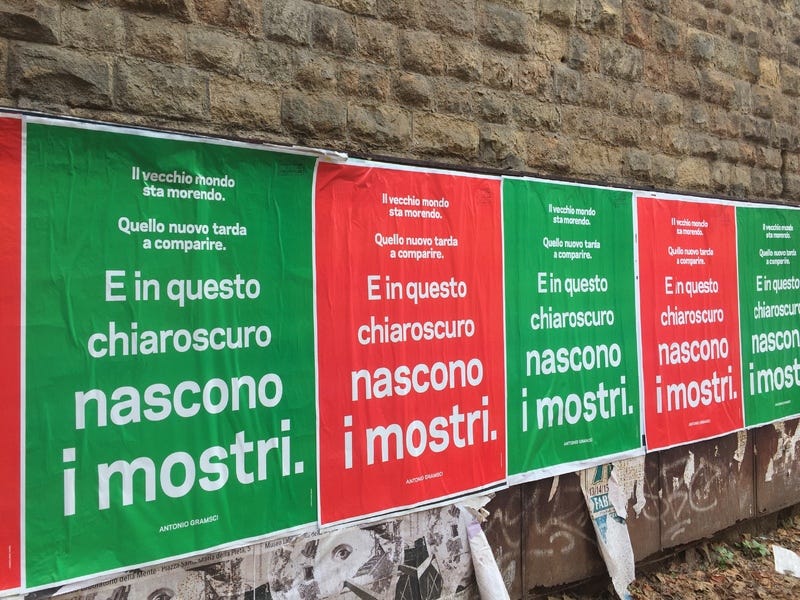
Posters by Alfredo Jaar in 2018 (image source) Japanese: 「旧きものが死に、新しきものは未だに日の目をみるに至っていない、この黄昏に、妖怪が徘徊する」とグラムシは語っている。 Google Translate renders this as “‘In this twilight, where the old is dying and the new has not yet seen the light of day, monsters roam,’ says Gramsci.” The monsters appear as 妖怪, or yōkai, a word used to describe a vast range of ghosts, specters, or monsters from Japanese folklore.
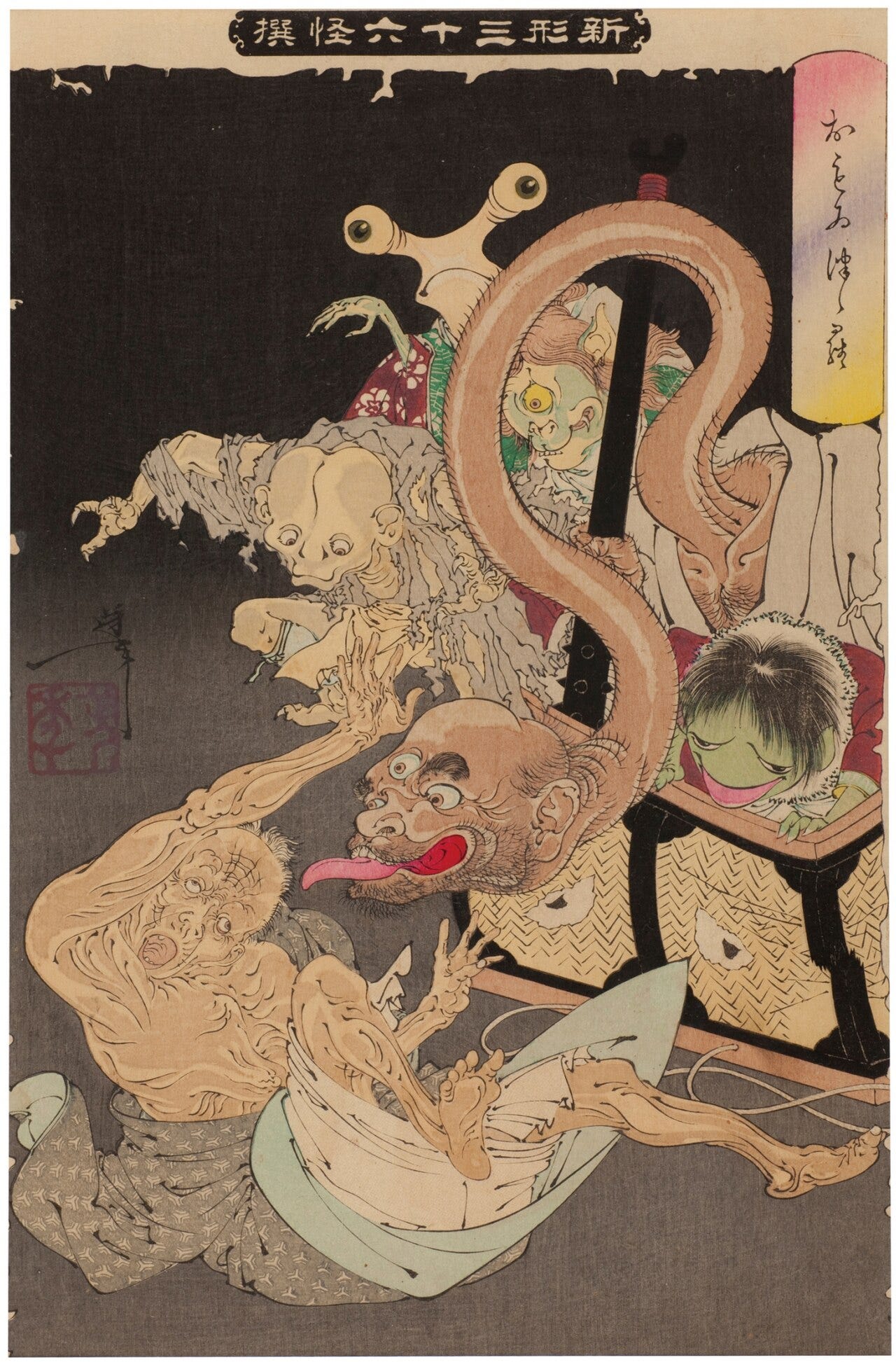
Some yōkai from The Heavy Basket from the Shinkei Sanjurokkei Sen, by Tsukioka Yoshitoshi (1892)
According to this blog post — which also debunks the idea that the Nazi Joseph Goebbels is the source of the mutant quote — Žižek cites untranslated French works, so it’s safe to assume he knows the language.
Morbido means soft in Italian, not that far from morbid in English.
So I will try to confuse everyone with an optimist version.
« The old is dying and the new cannot be born yet: in this interregnum there was still a great deal of softness »
Étienne this is top tier work