


I. Me, on a train, near Saint-Wenceslas, QC
I just saw it, a few weeks ago. That uncommon phenomenon where the sun is dimmed by thin clouds, making it white, well-defined, moon-like, as well as easy and painless to stare at (though still potentially dangerous!). I was on a train, somewhere near the village of Saint-Wenceslas between Quebec City and Montreal, around 9:47 on the morning of December 27th, 2025. I took some pictures; they are fairly representative of what it looked like, except that the whole image is a bit too dark. In reality, it was normal daytime overcast brightness.
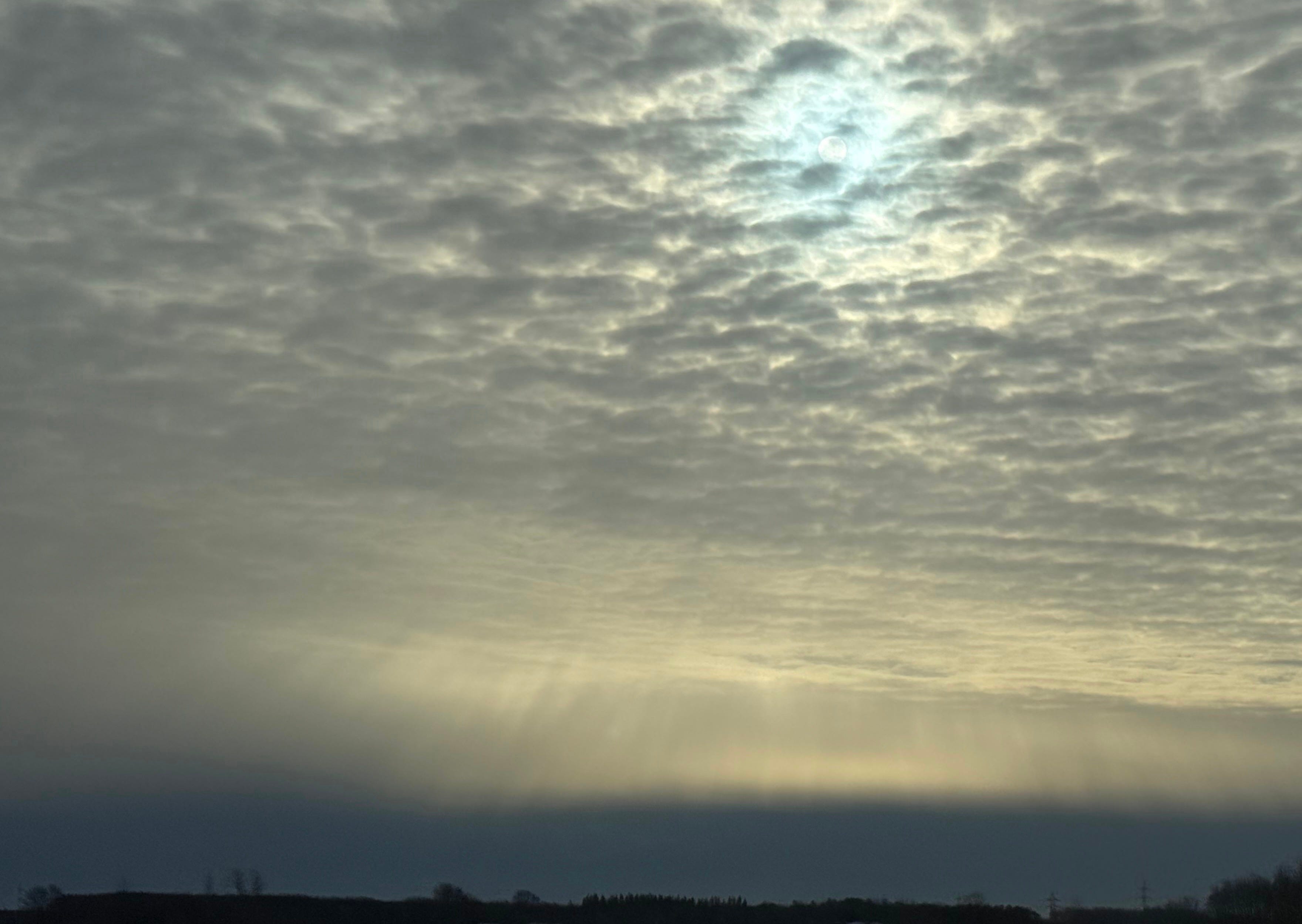
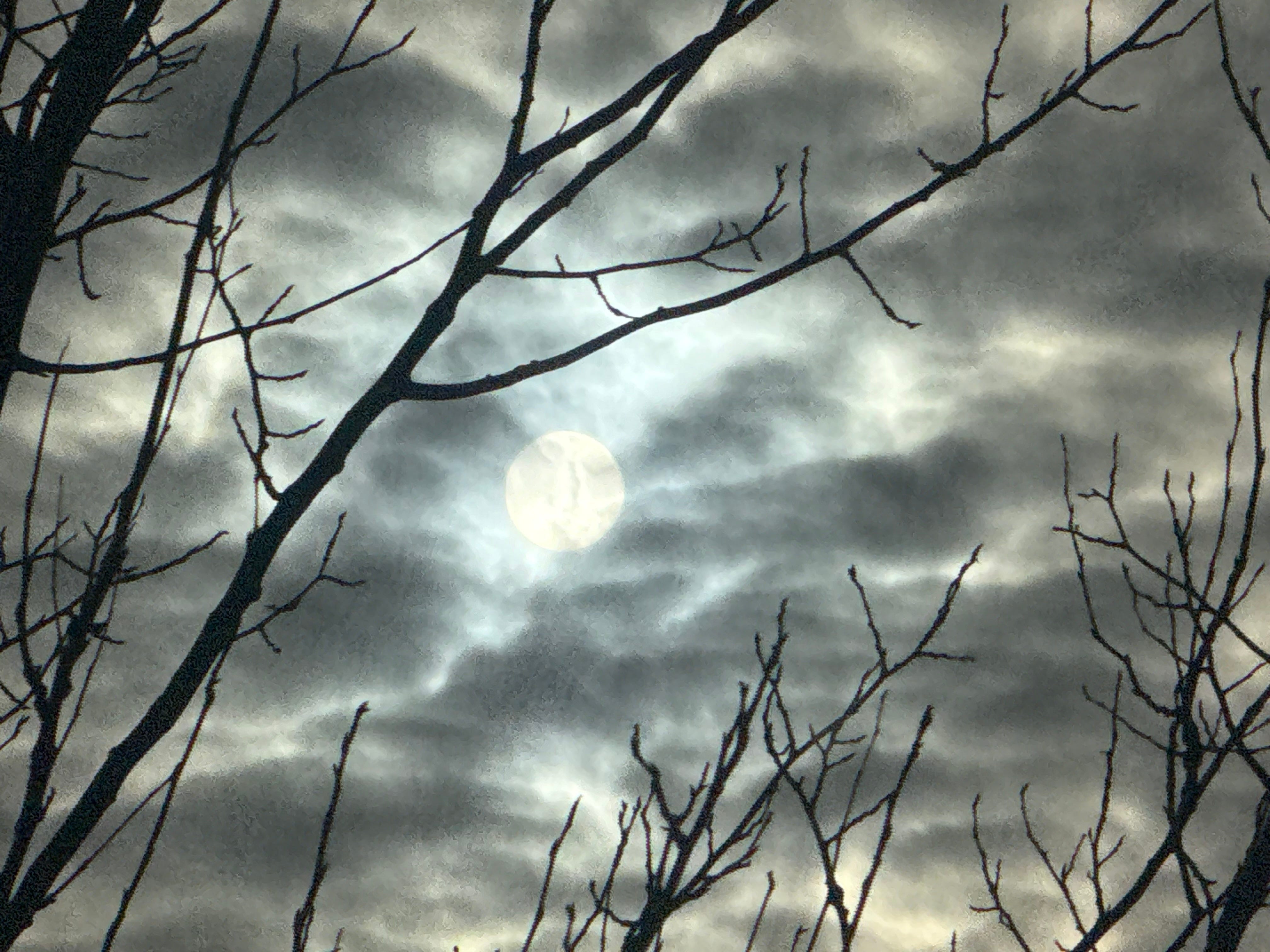
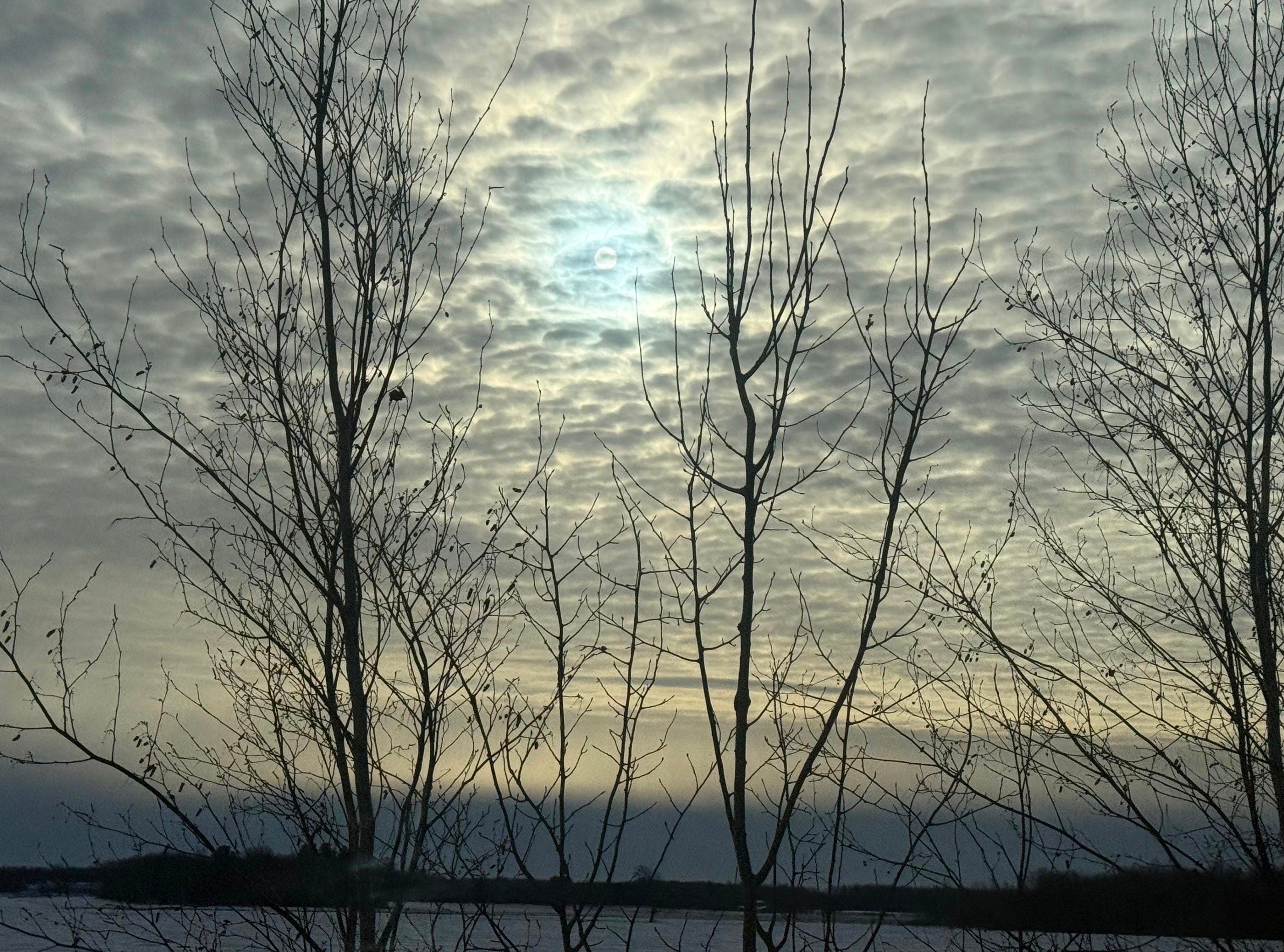
I have witnessed this phenomenon before, but it’s uncommon. I see it perhaps once a year on average. Until December it had been several years, maybe.
And, interestingly, I’ve never seen it being discussed, anywhere, online or IRL. Until a few months ago.

II. Scott Alexander, Ethan Muse, and thousands of WWI-era Portuguese people
On October 1st, 2025, Scott Alexander published The Fatima Sun Miracle: Much More Than You Wanted To Know. As its title implies, it’s long. Very long. The intro ends with this warning:
The cost of thoroughness is length; don’t continue unless you want to be nerd-sniped by 30,000 words about the weather in Portugal 108 years ago.
So we’ll focus on only a small part of it. In section 1.5: Making Sense Of The Testimonies, Scott starts by examining one piece of evidence for the Fatima sun miracle, which is a strange optical and/or supernatural occurrence seen by a crowd in Portugal in 1917. He describes the sun phenomenon I saw as a possible reason why some people think the Fatima event was miraculous:
“The sun looked pale, like the moon, and was painless to gaze upon”: Most sources treat this as the first aspect of the miracle. Several talk about how unbelievers are going to think it was just fog, but this can’t be true, because the edge of the solar disc was clearly defined, or there was no fog halo, or some other reason like that - and therefore even this first step was clearly miraculous.
I feel like I’m going crazy here - I see this regularly! Not often, but a few times a year. When the sun is sort of halfway behind certain types of thin cloud, it looks pale like the moon (I remember, as a child, being uncertain about whether the full moon was somehow out during the day and visible through clouds), is painless to gaze upon, and has a clearly defined edge.
This is exactly what I saw near Saint-Wenceslas. To make sure he’s not going crazy, Scott polled the Slate Star Codex Discord server, and most people who responded agreed they have seen this. Low sample size though, and not everyone did, so perhaps it’s not too surprising that people would have experienced it as a miracle, when combined with the other factors Scott discusses.
The blogger Ethan Muse, defending the supernatural interpretation of the miracle, expressed skepticism that the pale/moonlike/painless sun is possible at all, as cited in the Highlights From The Comment On Fatima:
The luminance of the solar disc at its zenith is on the order of 10⁹ cd/m².1 The maximum luminance that an on-axis, compact source can have without causing observers to experience discomfort glare is on the order of 10³ cd/m².
Bringing the Sun’s luminance down from 10⁹ cd/m² to 10³ cd/m² requires an attenuation factor of 10⁶. By Beer’s law, that presupposes clouds with an optical depth of roughly 14. When obscured by clouds that thick, the solar beam is essentially extinguished. All that reaches observers is light that has undergone multiple scattering within clouds, emerging from many directions rather than straight paths from the solar disc. The solar disc is reduced to a bright patch or vanishes entirely.
From his clarifications in the comments to the highlights from the comments, I infer that he might dismiss my testimony and photographic evidence, because the sun at 9:47 AM a few days after winter solstice wouldn’t be high enough in the sky to count as impossible for the purposes of the miracle. Still, when I first read the above, I was dumbfounded: how could someone be so adamant that a phenomenon doesn’t exist when I (and many other people online) have witnessed it?
I realized that part of the answer is that the phenomenon is nameless. There is no concept handle to conveniently discuss it, so it rarely gets discussed. Some people see it occasionally, though not often, and not everybody; its occurrence depends on very specific types of cloud cover and therefore on the climate. In some regions you’d never see it at all. Those who do see it might briefly comment to their friends that the sun is moon-like and painless to look at, but it’s not a very important occurrence, so it doesn’t lead to any heated debates online. So a canonical word or phrase never evolves, and we’re stuck with “you know, that thing where the sun is dimmed by clouds and looks like a pale moon, white, well-defined, and painless to look at.”
This is interesting in itself. It’s not that common to find a natural phenomenon that doesn’t have a name. I decided to dig in, and figure out whether this type of sun gets discussed at all, and under which terminology.

III. Claude, Google, and unexpected Chinese food
Researching something that doesn’t have a name is tricky. Fortunately, we now have technology for this, in the form of LLMs. I asked Claude to figure out what the thing is called, and find references for me. It did an okay job, which highlighted that indeed, there isn’t a single, common name for the occurrence.
Still, perhaps some of the phrases are better than other at finding the right thing? I tested many of them in Google Images. Here is an overview of the results.
White sun: random images of the sun artificially colored white, or this music group and their album:

Sun behind clouds: over the top images of sun rays bursting from beautiful clouds, like this:
Watery sun: a Korean sunscreen with hyaluronic acid

Dim sun: Google is adamant I mean dim sum

“Dim sun” (with quotation marks): Google is still adamant I mean dim sum

but is willing to vary the images a little bit …



Sun dimming: a geoengineering proposal to voluntarily dim the sun by putting chemicals in the atmosphere
Milky sun: either a sunscreen or the Milky Way

Veiled sun: I got this from French where it sort of works (soleil voilé), but the results are idiosyncratic: book titles including a memoir about Auschwitz, the coronal veil on the NASA website, various sunscreens
Wan sun (I didn’t know the word wan but it fits, it means pale or faint): the Korean actress Kim Wan-sun

Pale sun: success!!! Most images are just various incarnations of a weak sun that are not it, or the cover of the 1993 country rock album Pale Sun, Crescent Moon by the Cowboy Junkies, but we do get a couple of images like the below. As well as someone’s Soundcloud, which uses a similar image a profile picture.
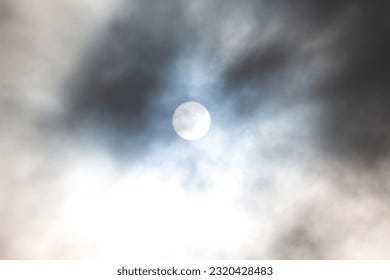
Pale sun behind clouds: this attempt to refine results backfires, leading only to images like this:
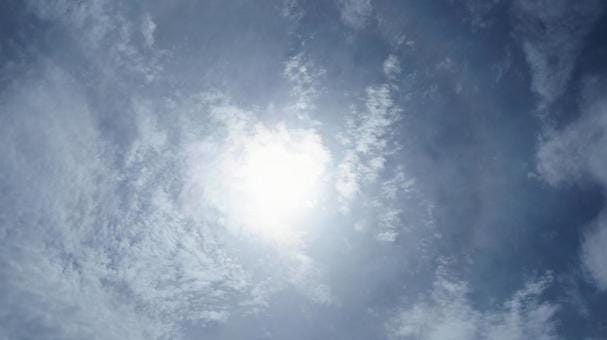
Overcast sun: again, a bit of success! Most images are irrelevant but these are great:
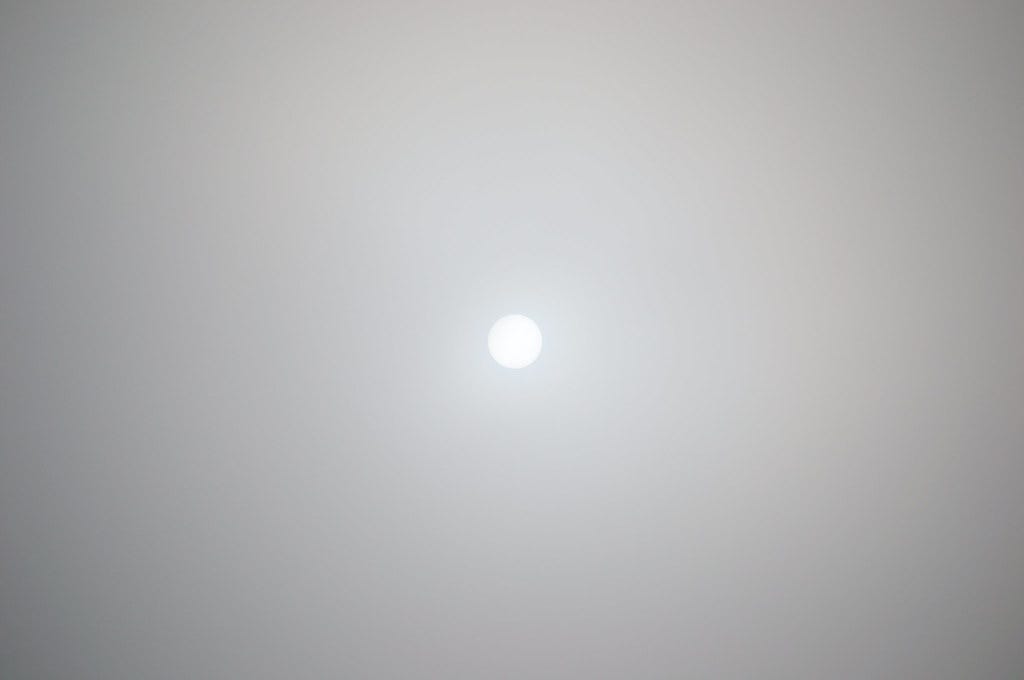
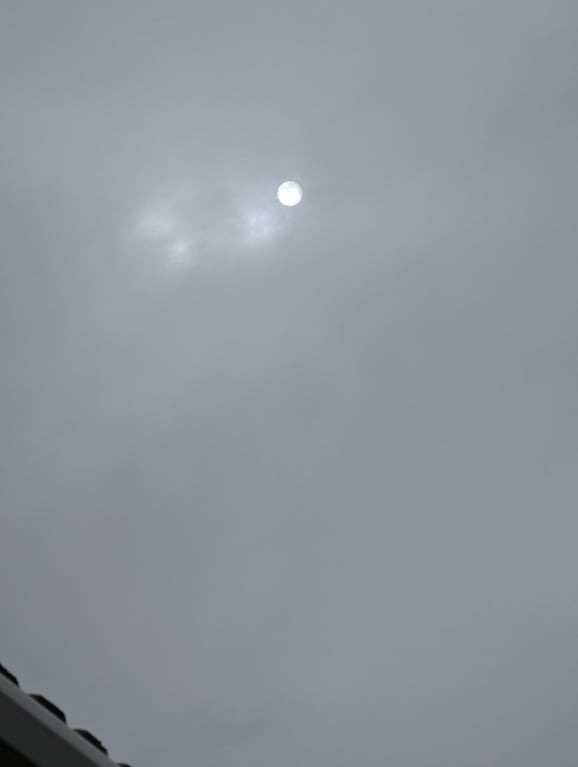
Solar halo sun: cool images but a solar halo is just a very different thing:

Diffused sun disc: no idea what I was hoping for with this, I get totally irrelevant astronomical images of the sun
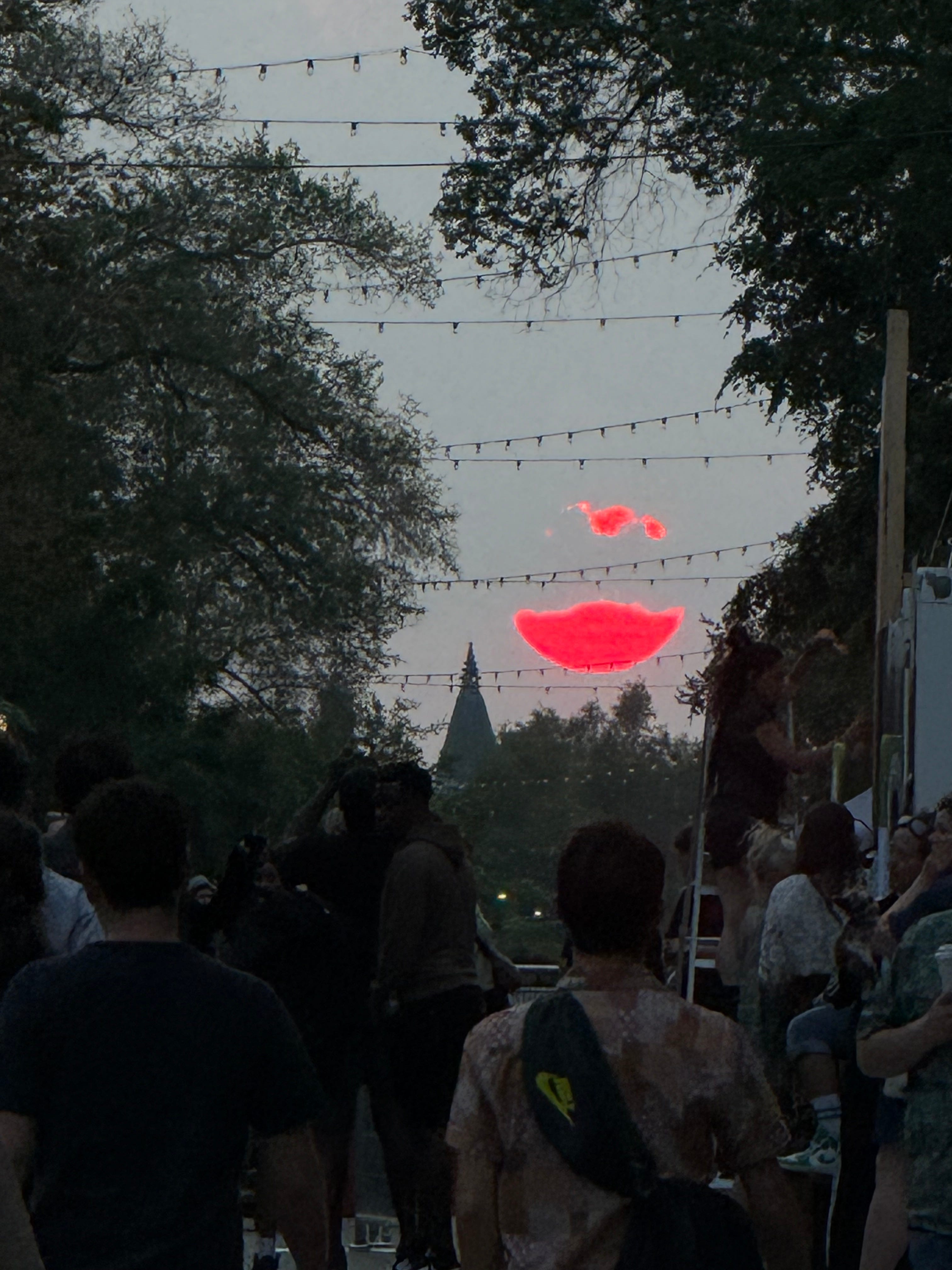
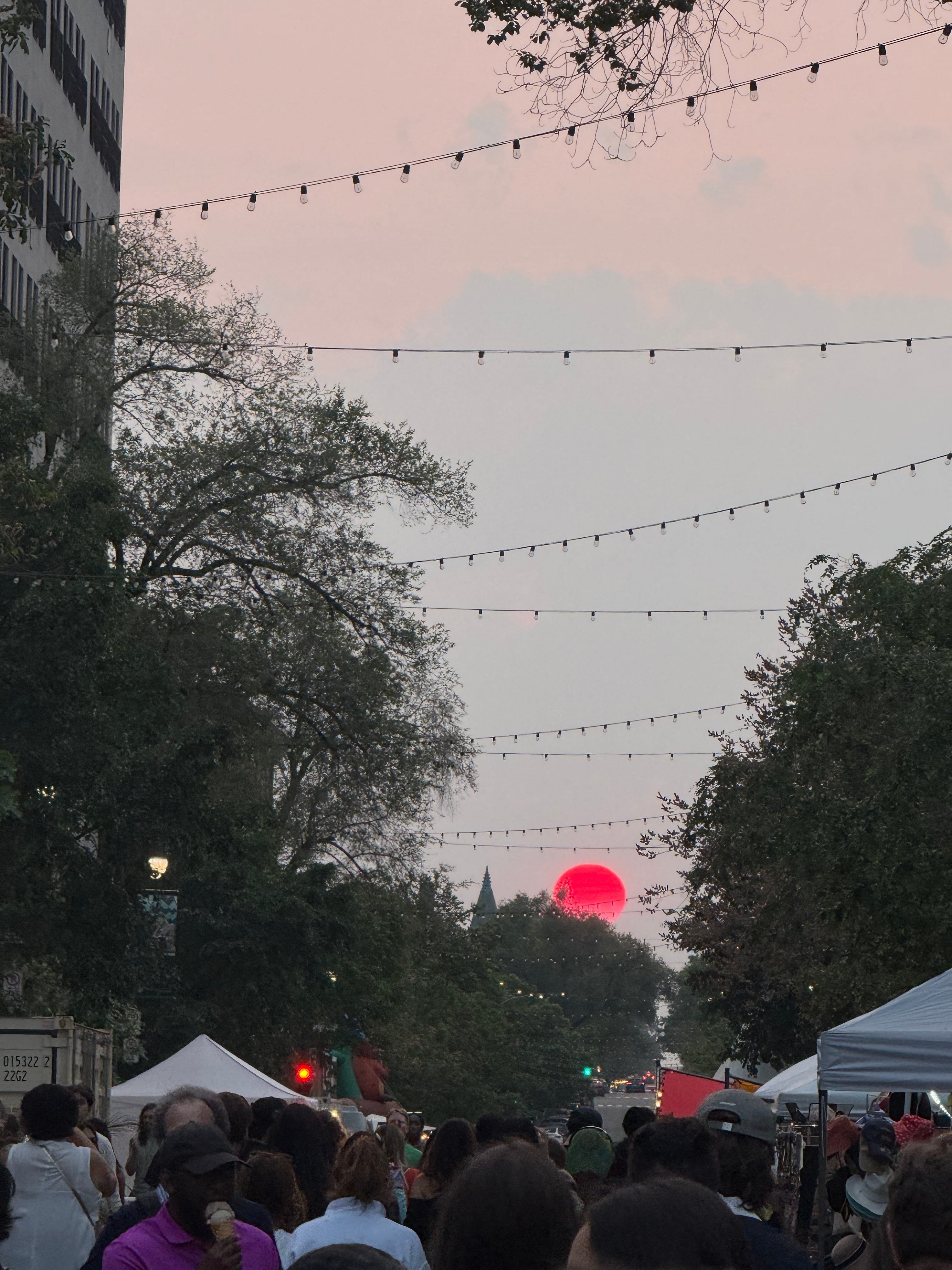
Smoke sun and hazy sun: good images of a related phenomenon, the sun appearing through smoke, smog, or haze, but it’s not quite the same thing. Notably, it’s much more orange or red:1

Fog sun: like “smoke sun,” this phrase seems very promising at first glance, even getting the white color right. But the phenomenon I’m interested in is caused by a thin layer of clouds, not a thick layer of fog.
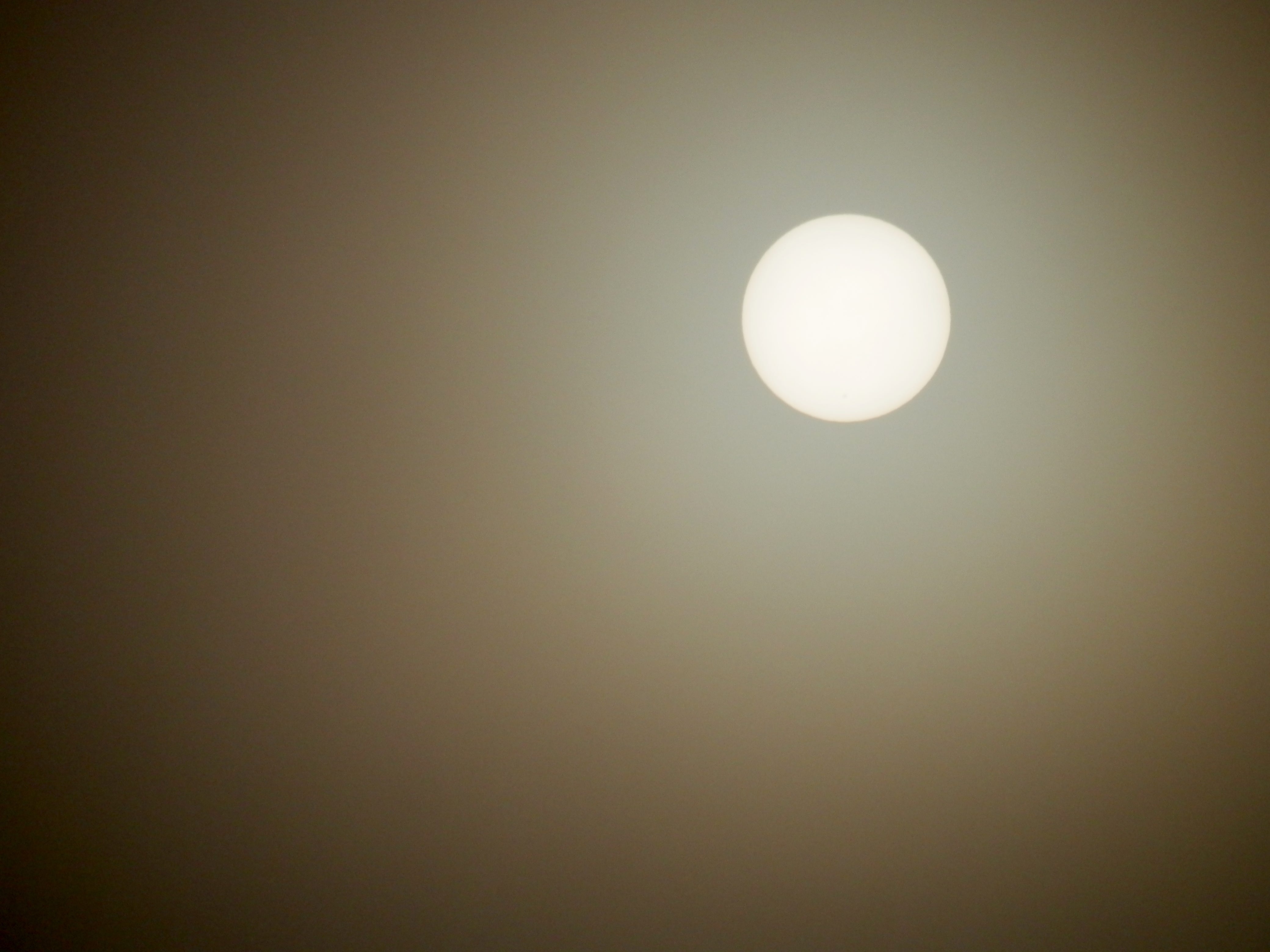
Sun visible through cirrostratus: wrong type of cloud, I think, because we only get the halos
Sun visible through altostratus: closer! The caption on this wikipedia image is interesting:
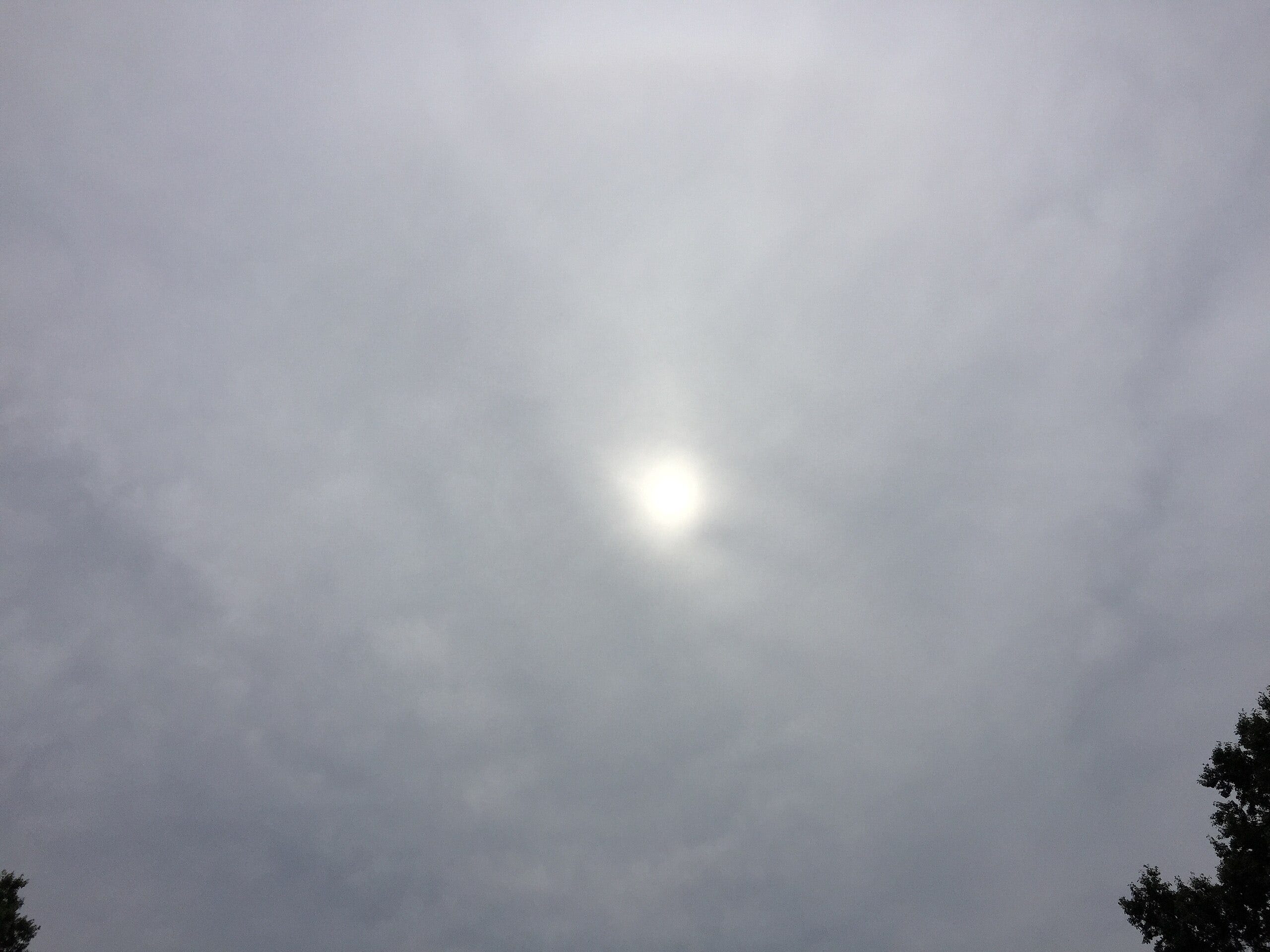
Alright. So it’s definitely possible to find traces of the nameless phenomenon online. But my hypothesis that there isn’t a canonical phrase is totally vindicated. “Overcast sun,” “pale sun,” and variations of “sun behind clouds” get us somewhere. But they get us other places too, which reduces their usefulness as concept handles. “Fog sun” and “smoke sun” are clearly adjacent concepts, but not quite the same thing. And “dim sun” could be a great phrase but it is hopelessly contaminated by Chinese cuisine.

IV. The scientific literature, via Elicit
At this point I turned to the scientific literature. Perhaps there exists some unwieldy but unambiguous piece of jargon in meteorology or astronomy journals? Leveraging language models again, I asked Elicit to find me “papers about the phenomenon where the sun is behind translucent clouds, pale, moon-like, and painless to gaze upon.” It returned a few key references:
Deirmendjian (1969) mentions that he was able to observe “a well-defined large sunspot near the center of the sun, whose disk was barely visible through a layer of coastal stratus cloud with the naked eye” on “28 October 1968, at about 1300 local time in Santa Monica, California.” He calls it the “filtered sun” a couple of times.
Linskens and Bohren (1994) say that “Although the Sun is often completely obscured by clouds, it is commonly visible through them. When the Sun is visible, its limb2 usually appears sharp, as illustrated in Fig. 1 . . . . At other times, the Sun is visible, yet its limb is fuzzy.” Their paper is focused on determining the difference in conditions that lead to sharp-edged vs. fuzzy-edged suns; they consider the latter the more unusual and interesting phenomenon. Sharp-edged suns, they say, are generally visible through fog, stratus clouds, and occasionally stratocumulus and cumulus clouds. Much of their paper consists of experiments with light bulbs and filters of various thicknesses.3
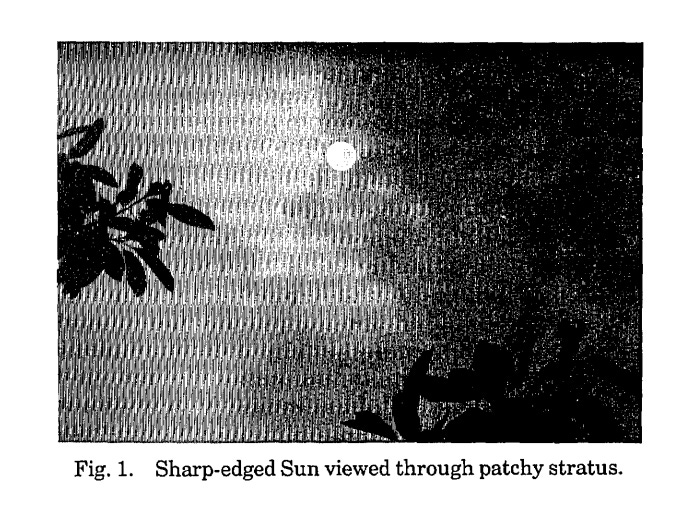
There is also Linskens and Bohren (1992), but it’s kind of unclear if this is a different paper and I can’t find the full text.
Haapanala et al. (2017) investigated the sun behind ice clouds (cirrus, as opposed to stratus), focusing on the attenuation and scattering of the light. Relevant, but not central. I like its use of the term “sunshape” to describe the radiance of the sun at some angular distance from it.
There are some other papers like that that study the physics of the sun’s luminance in the presence of clouds, but none that are too important to discussing the nameless phenomenon, I think.
Another possibly relevant link is the NOAA’s basic cloud atlas, which mentions that altostratus clouds are “thin enough to regularly reveal the sun as if seen through ground glass.”
So — the nameless phenomenon is definitely documented, but not a lot, and there doesn’t seem to be very precise terminology in the literature. We get “filtered sun,” “sharp-edged sun,” and “seen through ground glass” and honestly that’s kind of it. Science hasn’t succeeded at naming this any better than rationalists blogs or LLMs.

V. Landscape painters from 1808 to 1922
What about art? The pale, moonlike sun is perhaps not interesting enough to scientists to produce more than a couple of papers about putting light bulbs behind filters to analyze the limb, but the sun has been a favorite of artists for a very long time. I needed to find a cover image for this post, and so I looked at every entry from Wikipedia’s “sun in art” category, which at the time of writing this was 77 works. It’s a pretty random collage and most works are irrelevant (like the seal of Arkansas, or the World War II Victory Medal) but I did find a few that capture something close.
First we have Frederic Edwin Church, an American painter from the 19th century known for his epic landscapes. Some of those landscapes involve the sun, and one, El Rio de Luz (“The River of Light”), involves what looks like a sharp-edged sun disc behind a veil of clouds:
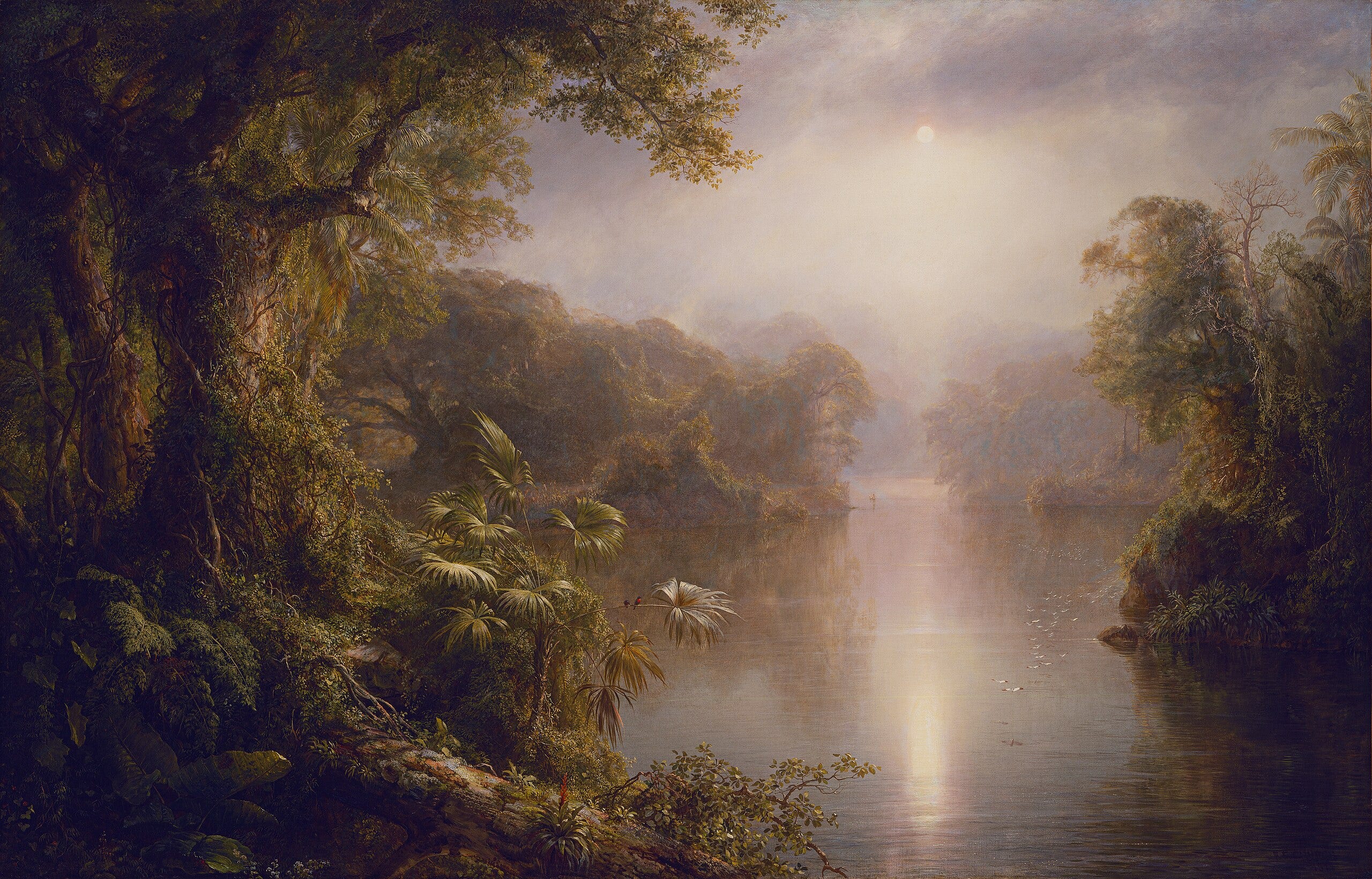
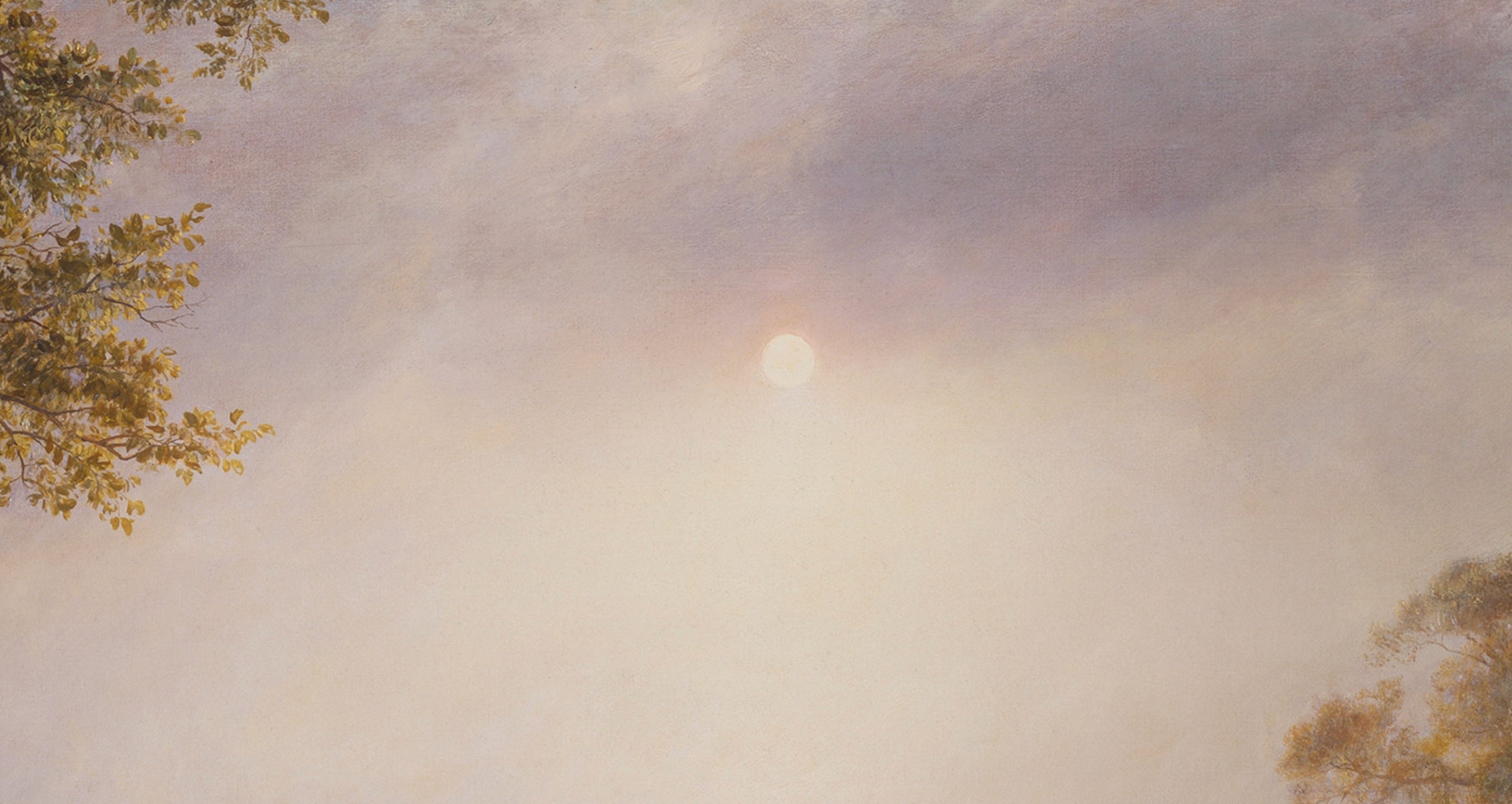
The National Gallery of Art describes this sun as “a small disk of white low in the humid sky amid pale lavender-purple clouds” and notes that its rays “lead us from the water to the glowing air above, where they seem to join earth and heaven.”
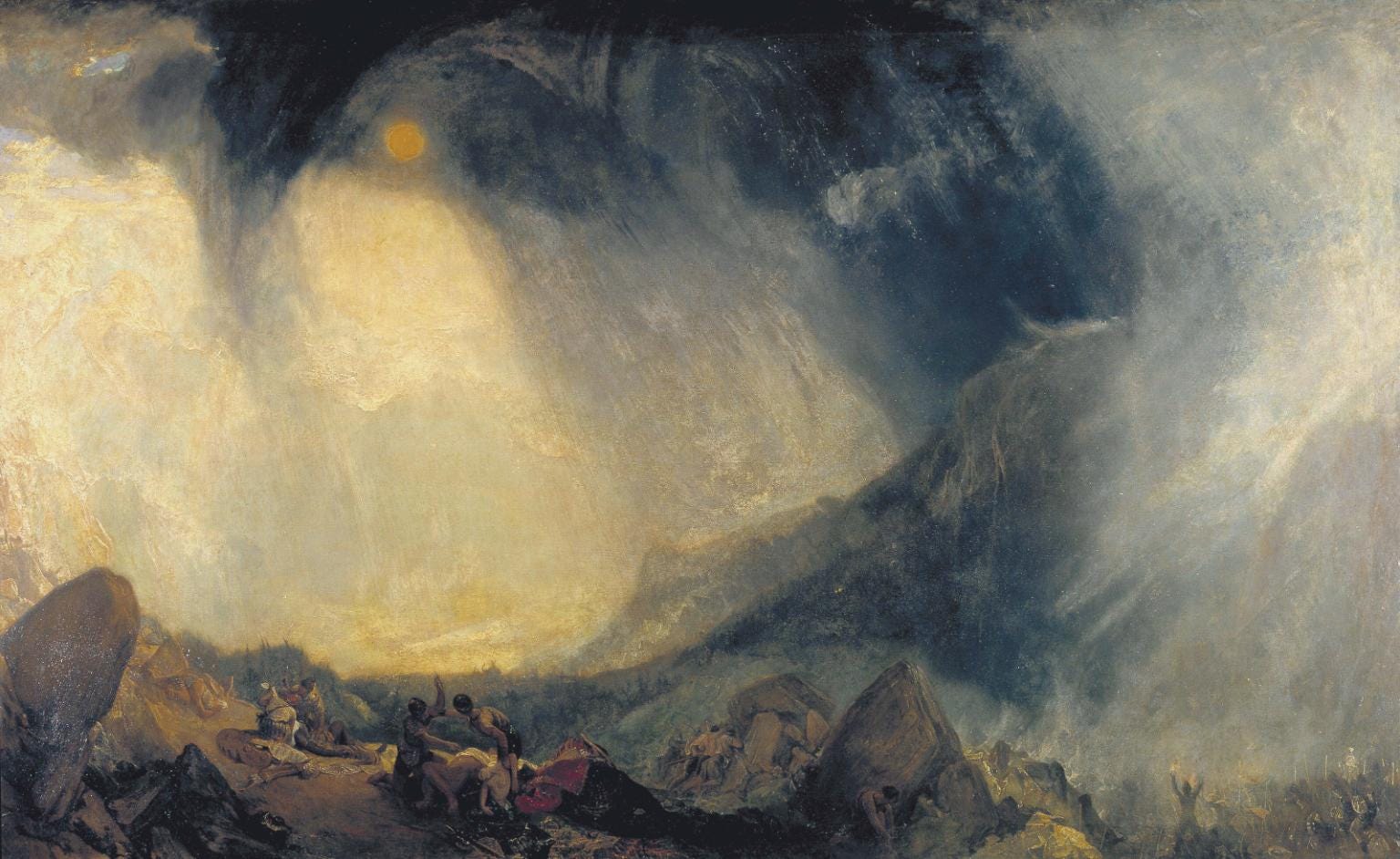
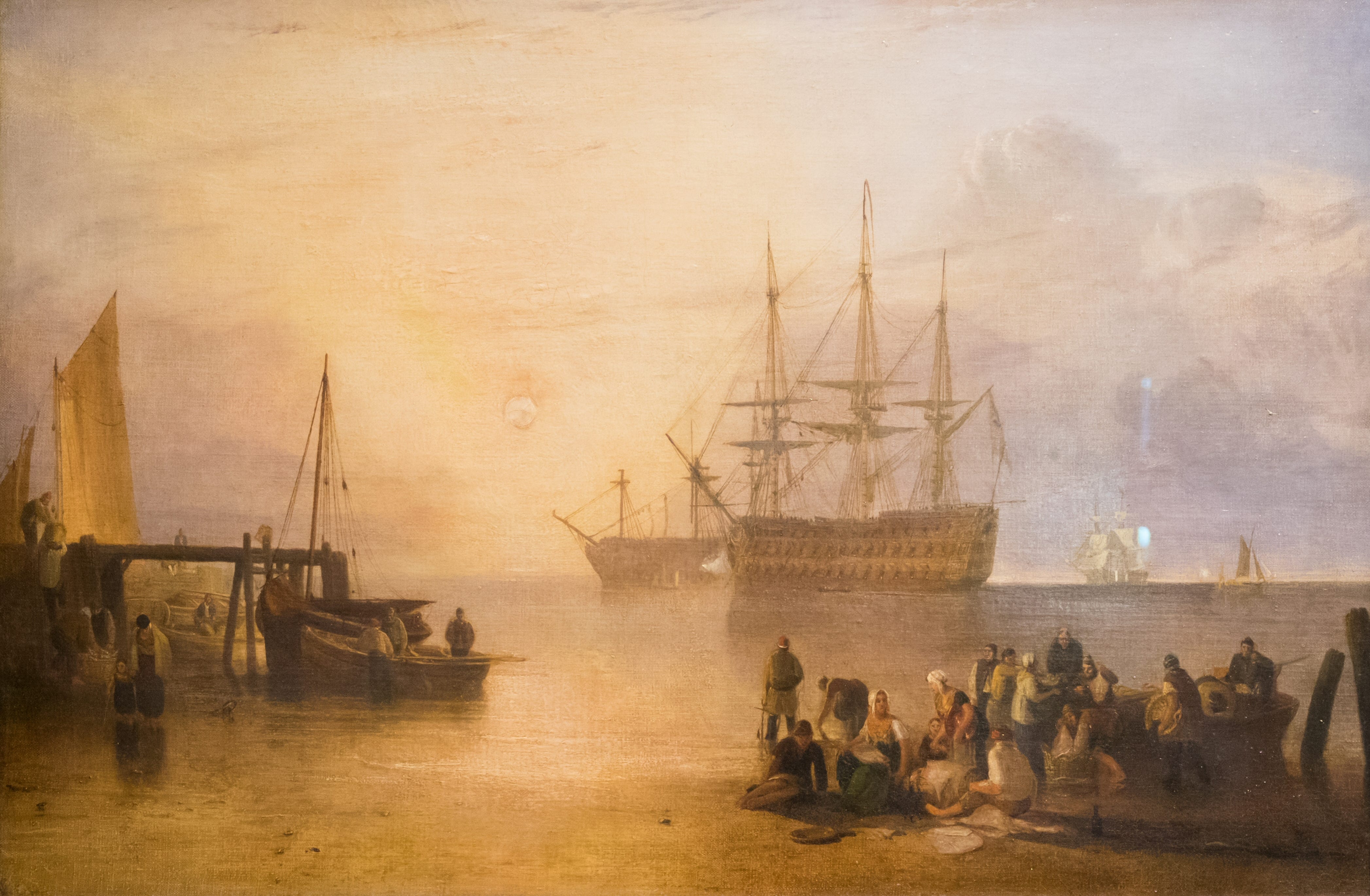
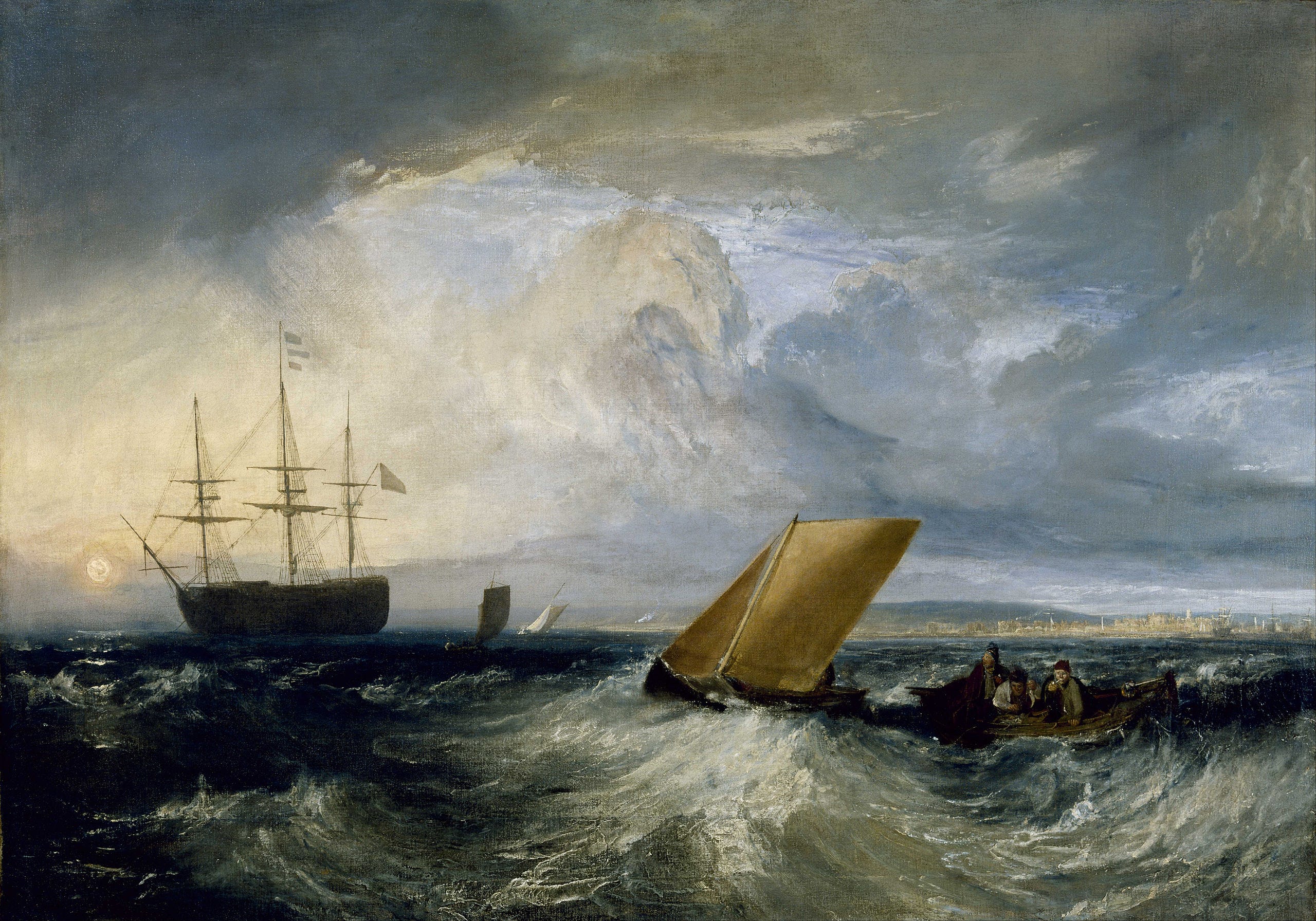
Then we have J. M. W. Turner, also known for his landscapes and especially his expressive skies. His suns are a tad fuzzy and often low on the horizon, but they do show the well-defined disc through either a snow storm, sea mist, or clouds over the sea. The orange sun in Snow Storm: Hannibal and his Army Crossing the Alps4 is particularly striking with its dulled, muted appearance.
Monet’s Impression, Sunrise (otherwise famous for giving its name to the impressionist movement) also features an orange sun, near the horizon. The sun appears as a sharp-edged disc that shines through mist, but not very strongly:
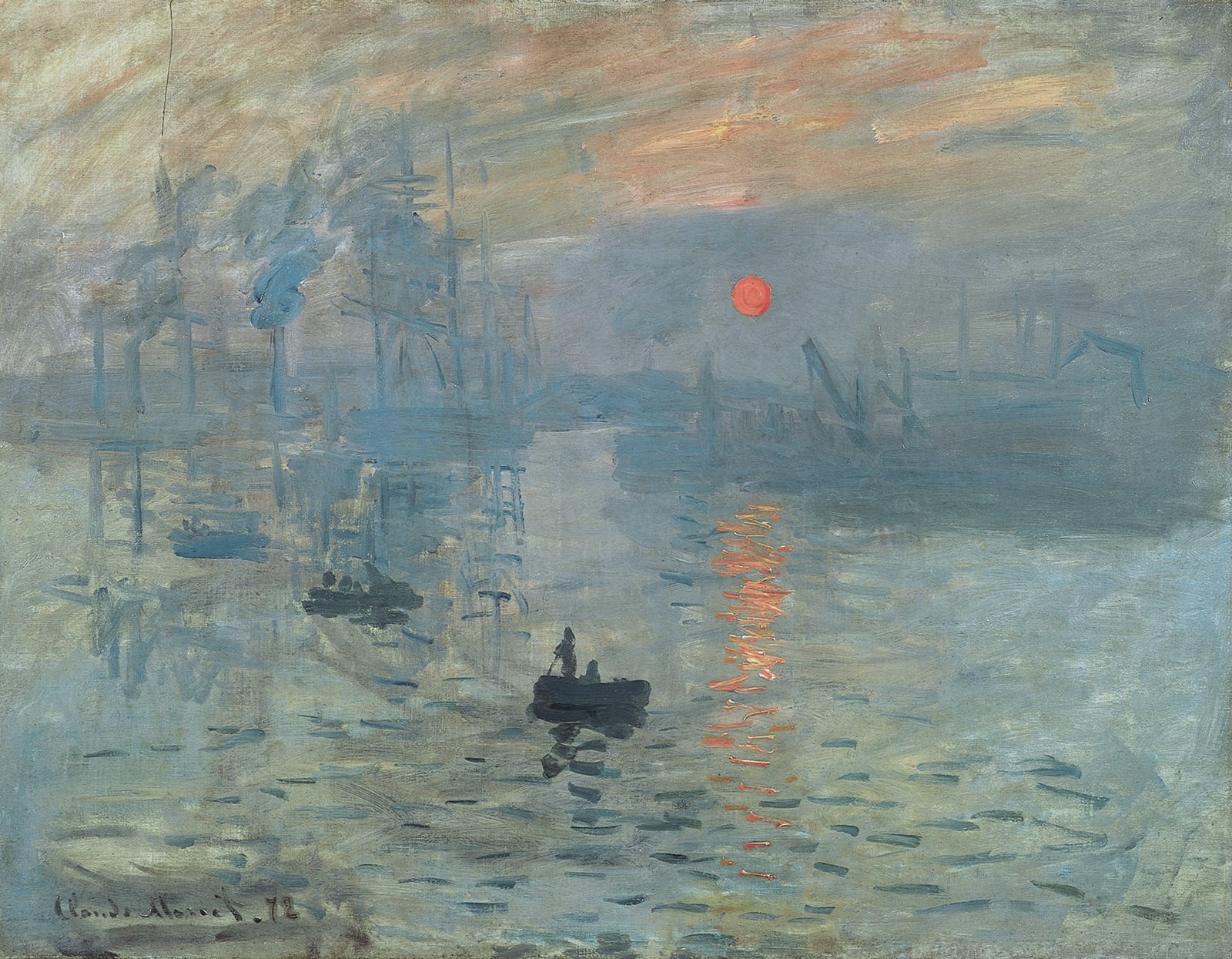
An interesting fact that has been noted by academics is that the sun in Monet’s painting is not, in fact brighter than the rest of the landscape. Its presence depends fully on color. If we desaturate the image, the sun becomes almost invisible:
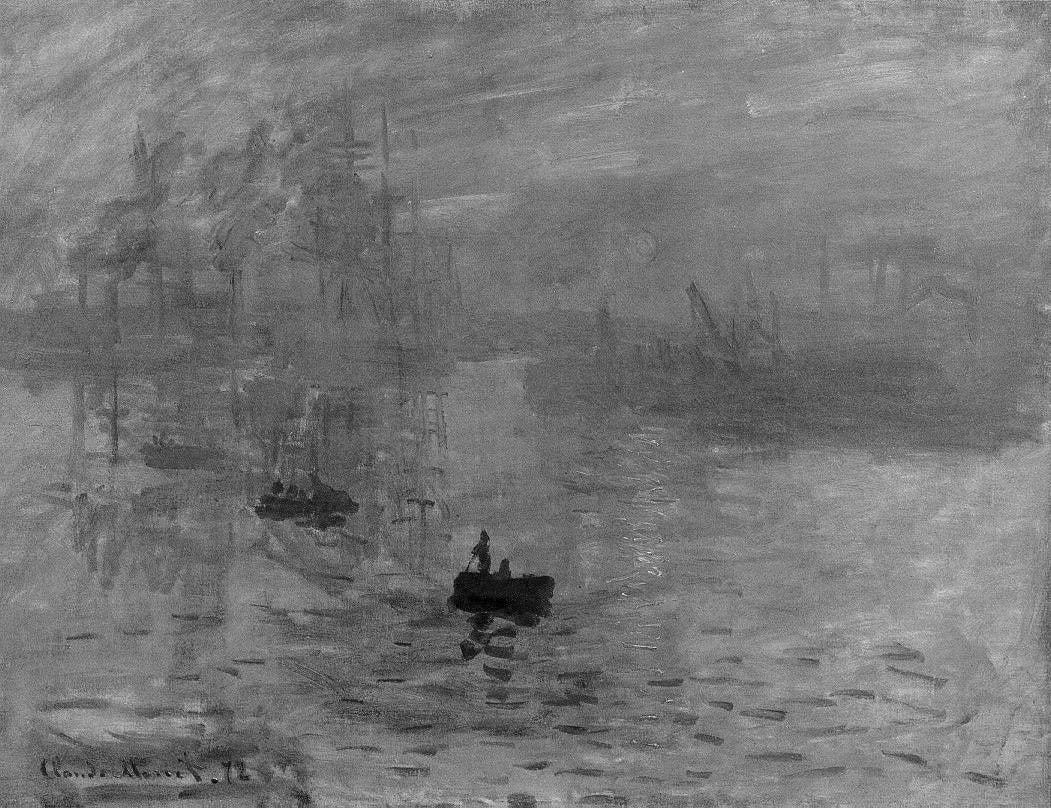


I like how this reflects the nameless phenomenon in the sense that both take away what’s typically most important about the sun: that it is much brighter than anything else.
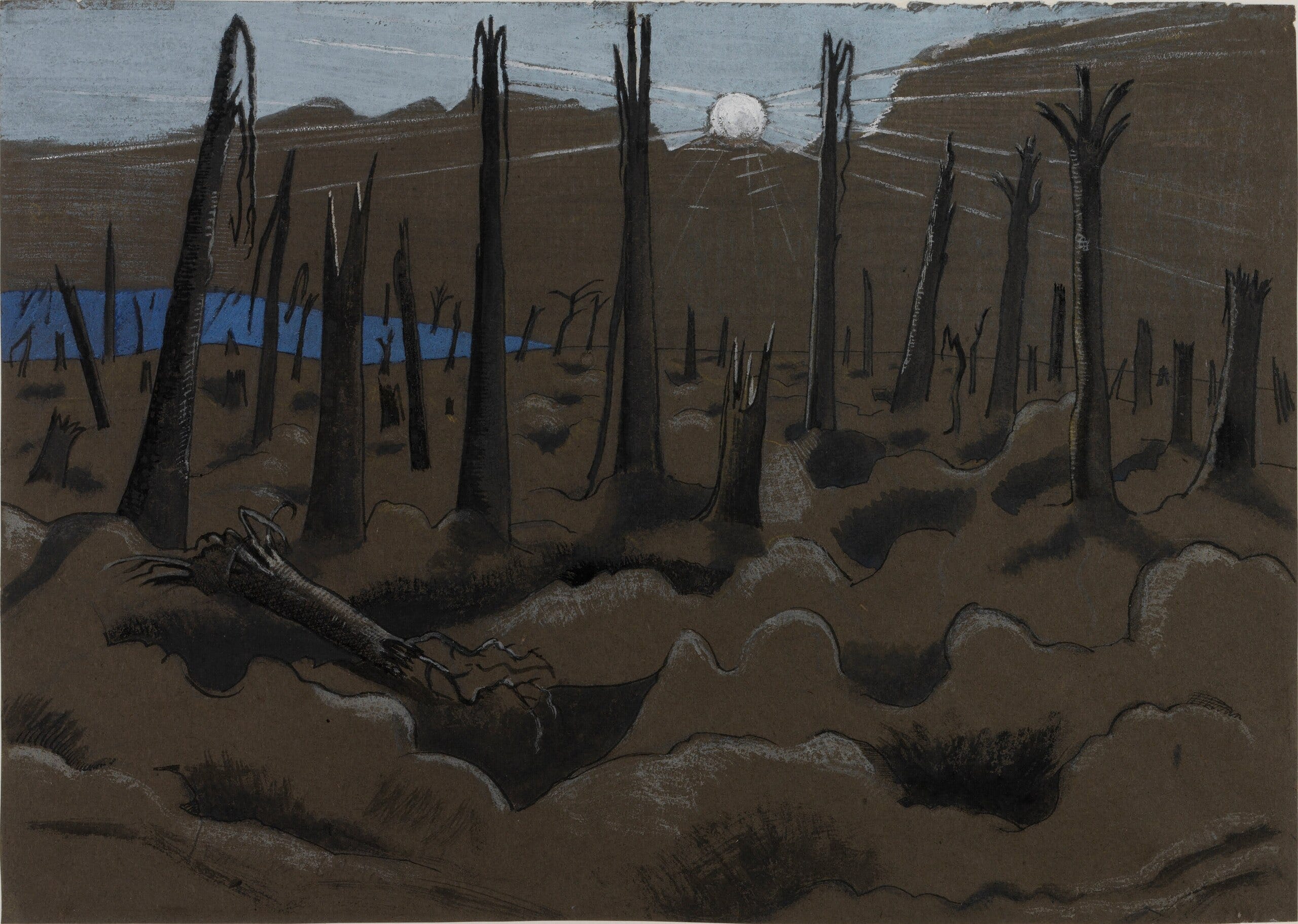
Here are a few paintings where the sun is not behind clouds, but is painted as a dull, moon-like disc:
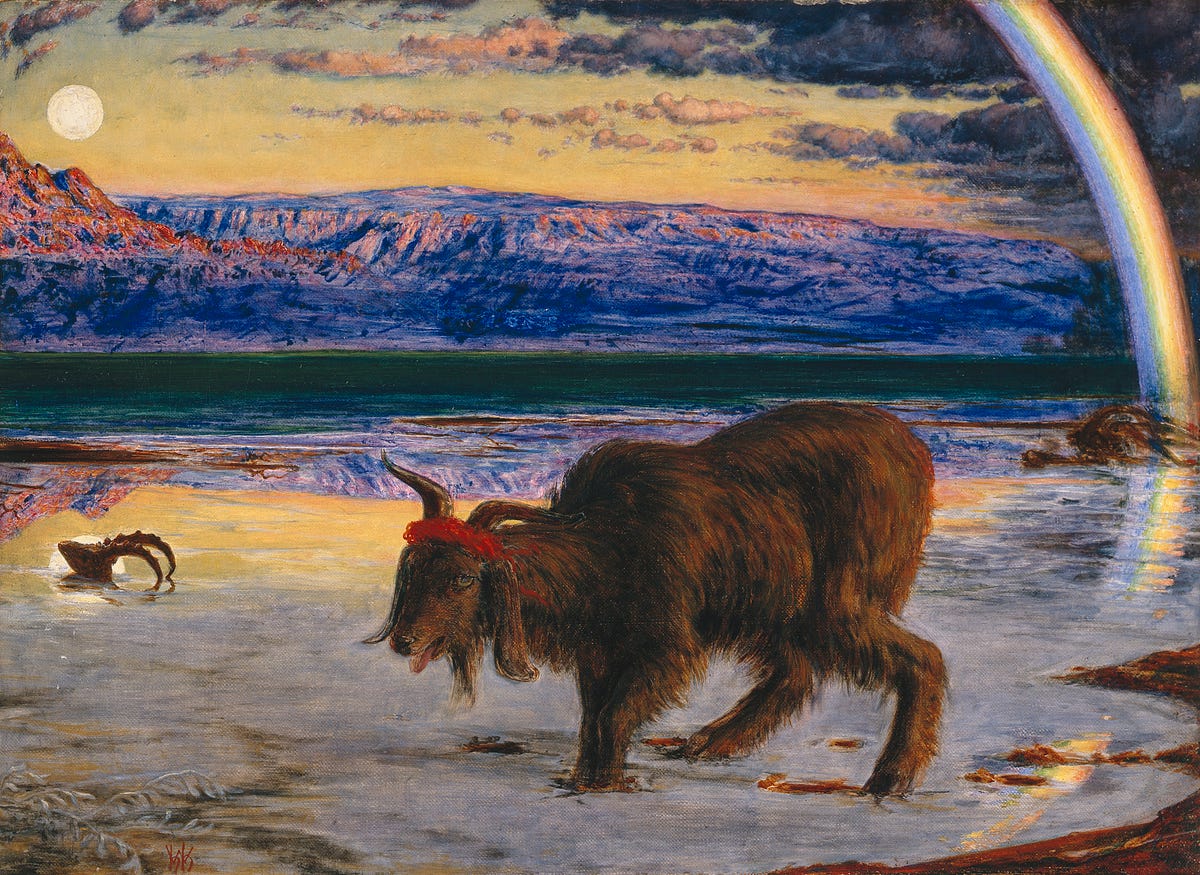
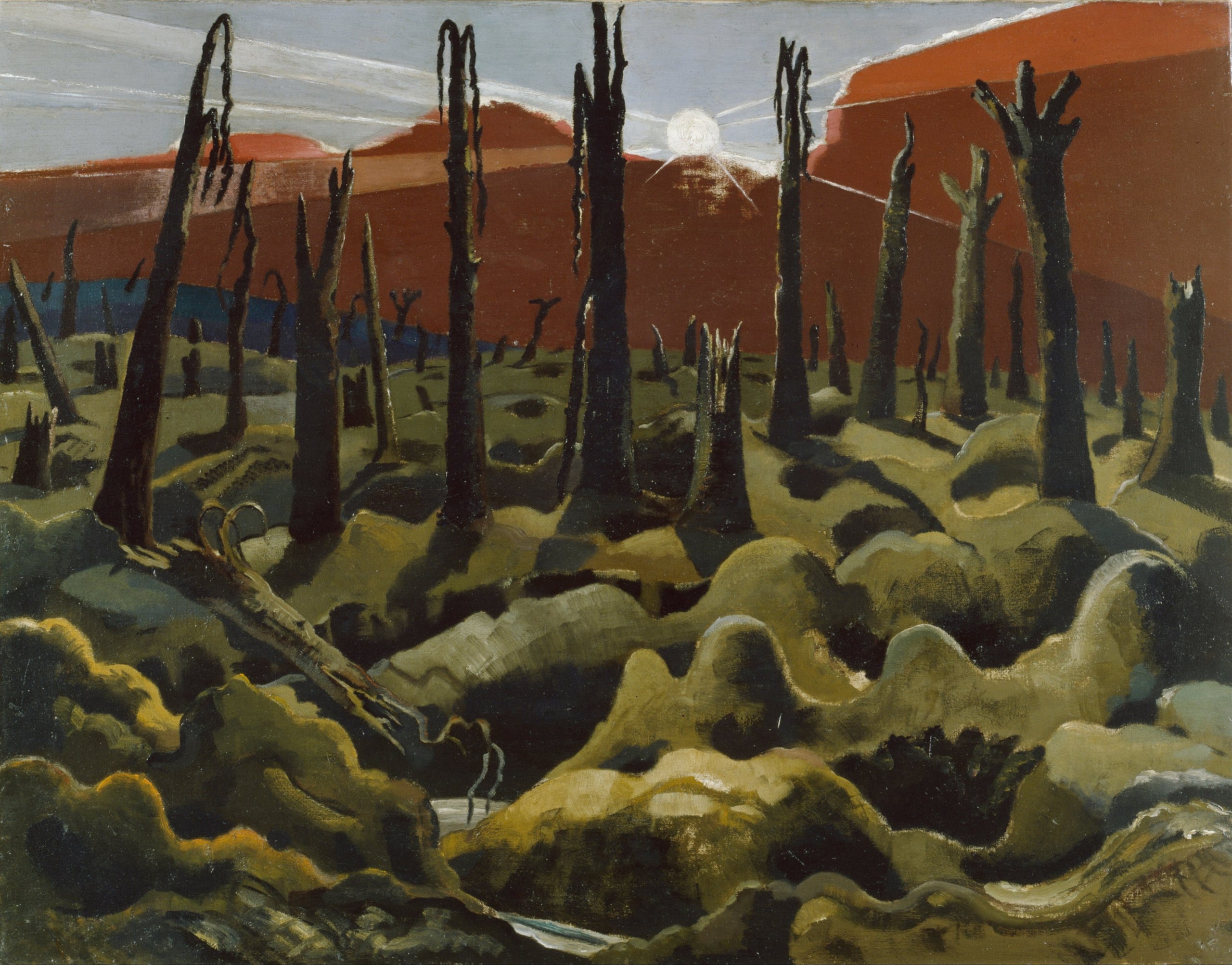
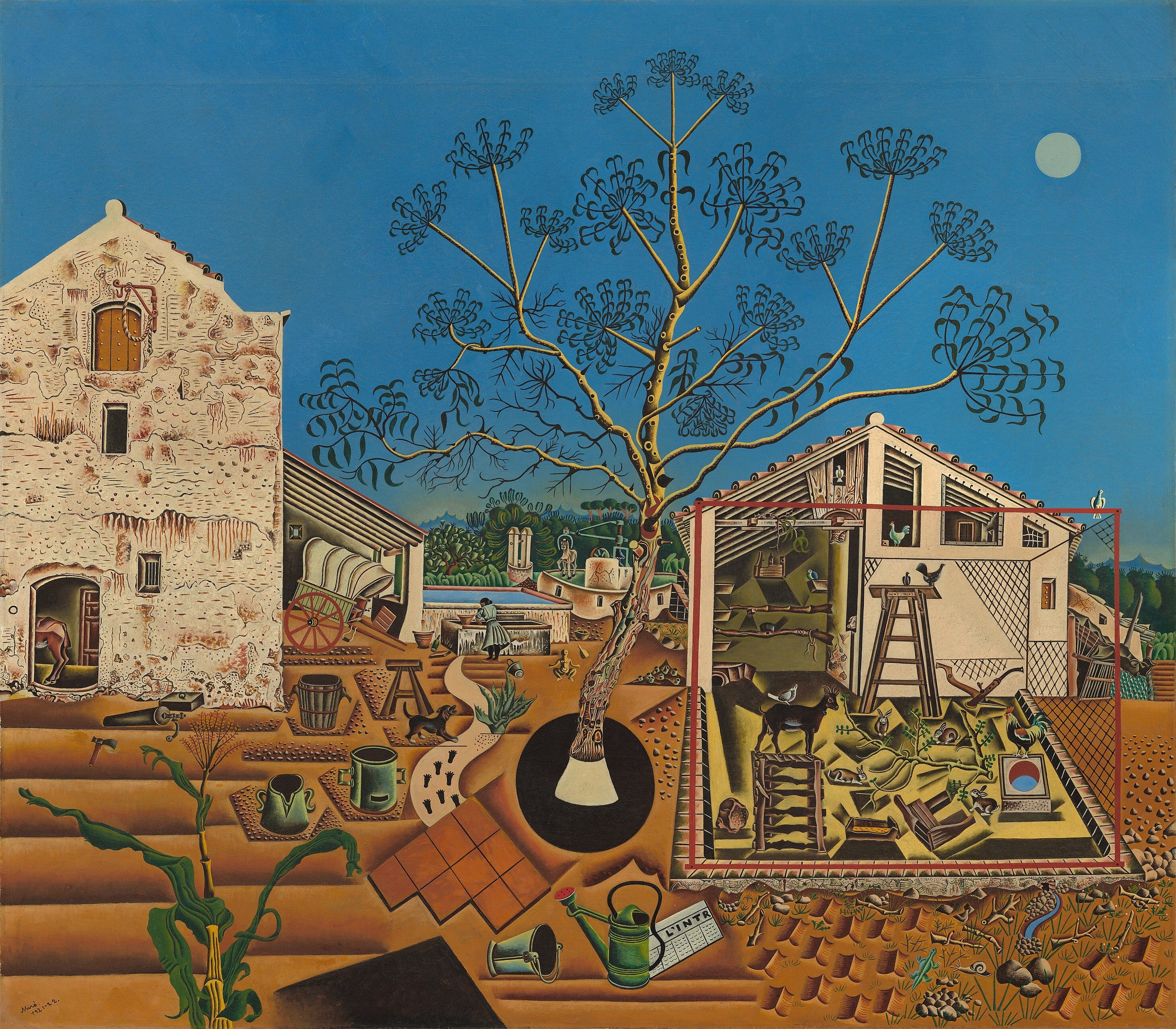
In all three, the sun should be much brighter than it feels. The Scapegoat’s “distant and illuminating sunset or sunrise contribute[s] to the otherworldly and poignant mood”.5 In We Are Making a New World, the sun sports bright rays, but is white on a gray sky, bringing cold light to the desolate WWI landscape. In Miró’s The Farm, which is one of my favorite paintings ever, the image “pulsates with hot, clear sunshine, but the blazing light casts no shadows. In the midday sky, the sun is represented by a disk that, oddly, is silvery gray—the color of the moon.”6 Despite the perfectly clear, blue sky, to me it is the painting that captures the nameless phenomenon the best.
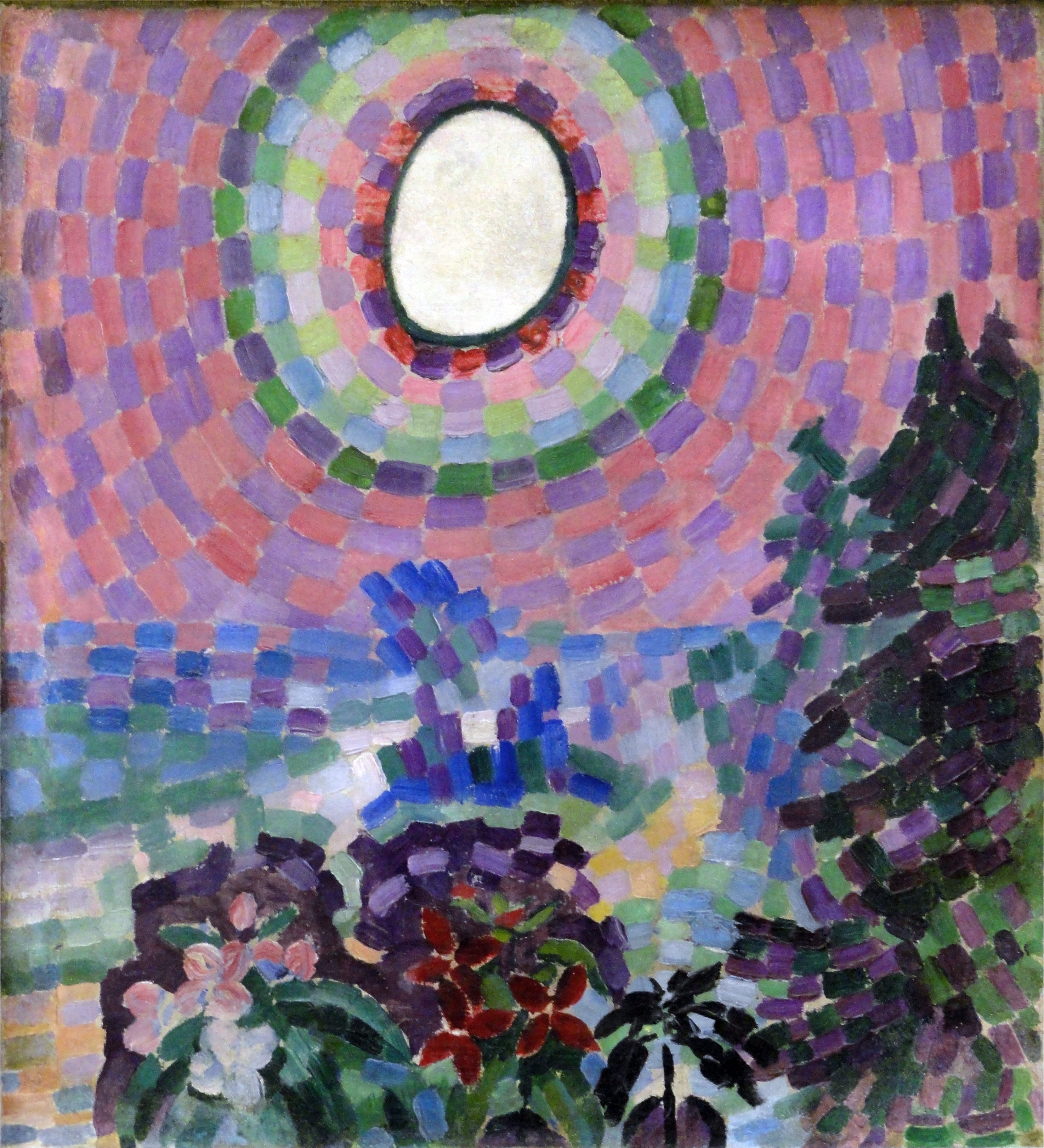
Except perhaps for the painting I chose as the cover for the post, Paysage au disque, whose title doesn’t even refer to the sun but to “the disc.” Here it is again:
Unclear whether the pointillist pixel-like brushes are clouds, but I feel like this bland, pale sun very well captures the spirit if not the exact appearance of the nameless phenomenon.
What to conclude from this artistic exploration? Though some of the artworks above get us close to the phenomenon under discussion, I don’t think any of them depicts the real thing. Artists prefer to paint dramatic sunsets, sunlight effects, or suns that are muted for symbolic reasons (as in Nash or Miró). The nameless phenomenon is not only nameless, but also artistically uninspiring. It is visually interesting when it occurs, but doesn’t trigger any emotions. Nobody really cares.

VI. Me, in a coffee shop, on a day where the sun shines behind clouds but not quite sharply
Today the sun looks like this:
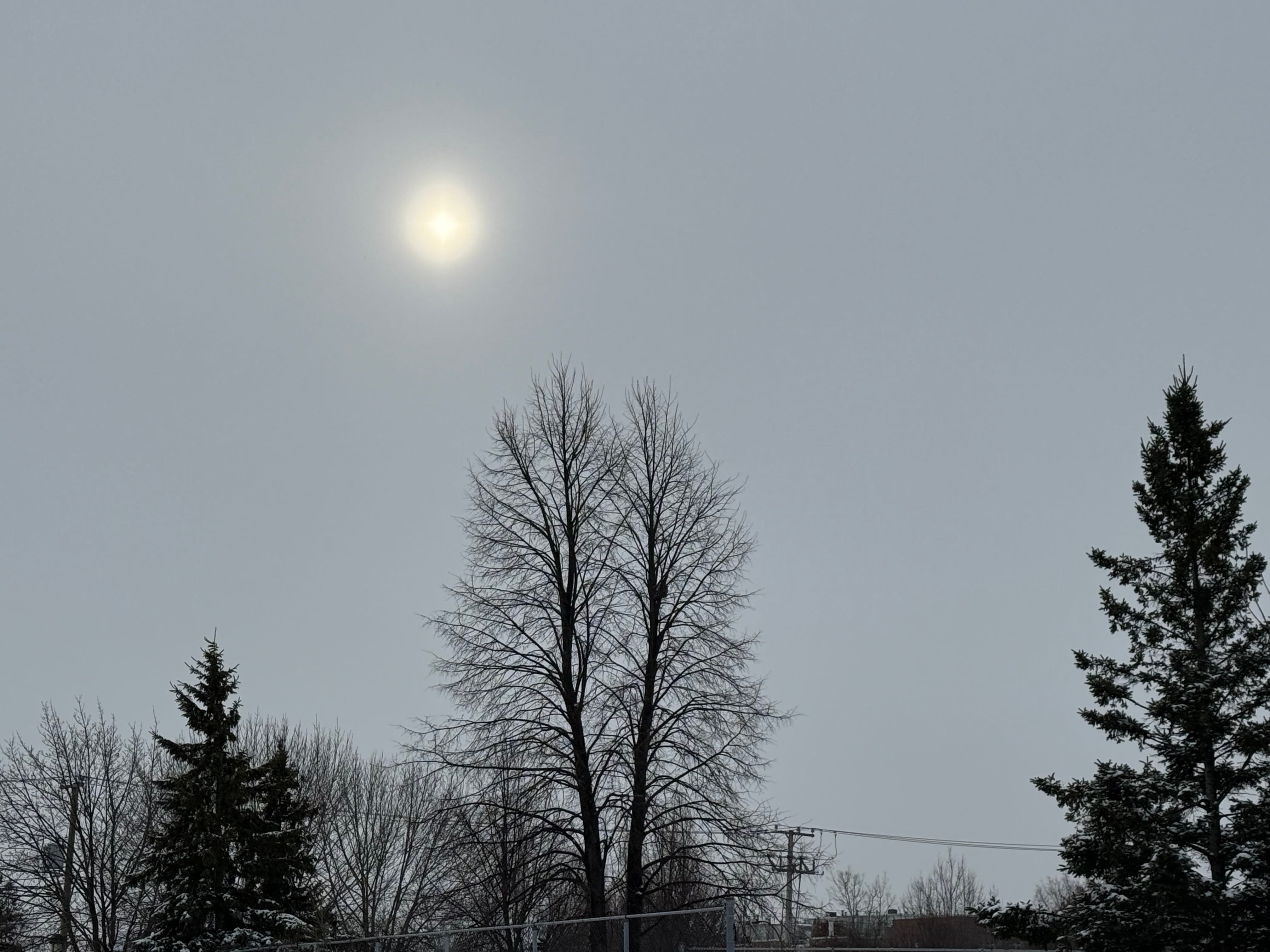
It seems like an appropriate day to finally finish this essay, which was supposed to be a quick take written entirely on the train on December 27th. Why did I decide to write about a nameless phenomenon that nobody really cares about? Why is this taking me weeks to complete?
My original aspiration was to figure out what is the best name for it and suggest it as a permanent addition to the English language. But… I don’t know. None of the phrases seem particularly good. “Overcast sun” and “pale sun” work in Google image search, so maybe they’re the most promising. I also considered filtered sun, sharp-edged sun, ground glass sun, white sun disc, gray sun, muted sun, veiled sun, and (this is an inside joke) white aten. I kinda hate them all. Turns out coining new phrases for permanent addition to the English language is hard.
If I had to choose among all the options I’ve seen, I think I’d go with pale sun, with “filtered sun” and “veiled sun” as runners-up. “Pale sun” was one of the most successful search terms, and it’s short, convenient, and precise enough. I’m not fully convinced though, so I’m open to new ideas. Regardless, if a real canonical phrase emerges, it will come from widespread usage. So if you see the phenomenon, don’t hesitate to photograph it and then discuss it online.
I have some excellent pictures of smoke suns from smoky days in Montreal last year, like these ones near sunset on June 7th, 2025:
In astronomy, the “limb” of a celestial body is its edge.
The title of this paper is “Appearance of the Sun and the Moon seen through clouds”; they mention that everything they say applies to the moon as well. Indeed, I saw the same phenomenon with the full moon a few days later, on January 2nd, 2026:
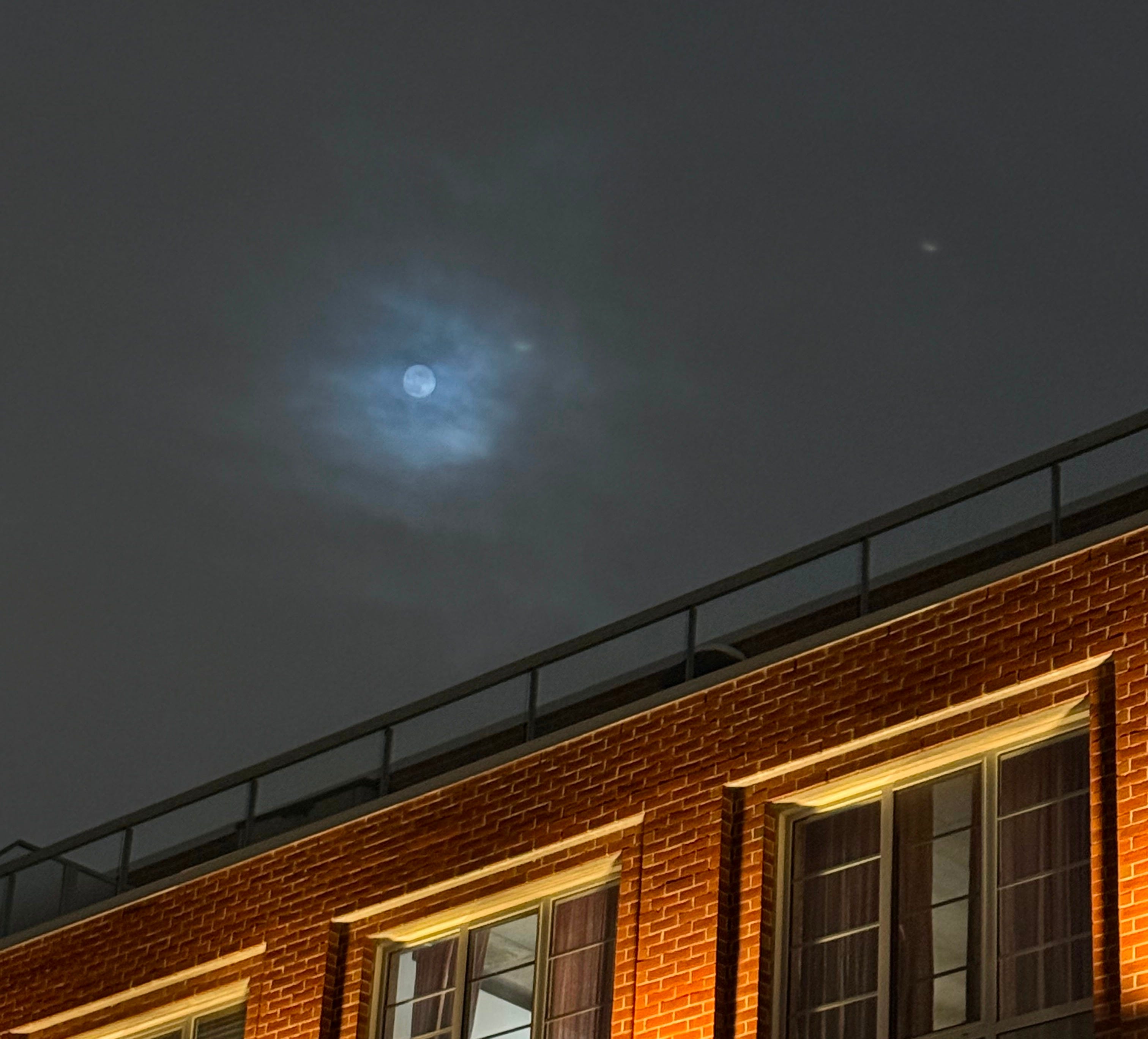
Of course, the effect is much less spectacular, since the moon is already pale, painless to gaze upon, and (rather obviously) moon-like even on clear nights.
Is it just me or this vaguely sounds like the title of a video game?
Have you thought of the language of poetry? Many Italian poets wrote about the sun in anthropomorphic terms, associating the quality of paleness or splendor with the interior ambiance.
It appears "translucidus" is the cloud variety specifically characterized by the phenomenon you describe: https://en.wikipedia.org/wiki/Translucidus_(cloud_variety)
Seems like the appropriate word would be some variant of "translucid sun". Except that adjective applies to the medium (the cloud) and not the patient (the sun or moon). Which sent me down a rabbit trail conjugating "lucere" -- but I think the closest thing to a patient form would be "transluctant sun"